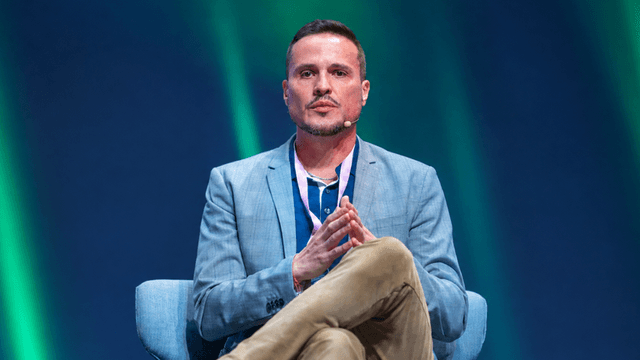
The Communication Architect of Modern SaaS: Why Andjelka Djukic Is Redefining How Growth Actually Happens

A modern SaaS expert redefining growth by turning technology into human-centered communication systems.
Most SaaS companies describe growth in the same language: automation, scale, optimization, efficiency. It’s a language built for systems, dashboards, and investors.
But underneath that language sits a quieter truth many organizations struggle with, software doesn’t scale trust, communication, or alignment on its own.
This is where the work of Andjelka Djukic stands apart. Not because she rejects technology, but because she reframes how it actually works inside organizations: as a communication layer, not just a performance engine.
In a market saturated with tools promising to “simplify everything,” her approach focuses on something more difficult to quantify and far more valuable in practice: how people actually experience systems once they are deployed.
The Hidden Problem in Modern SaaS Growth
In most scaling companies, a familiar pattern emerges.
A tool is adopted to solve a problem.
Dashboards improve.
Processes become automated.
Activity increases.
And yet, alignment quietly deteriorates.
Teams begin operating faster, but not necessarily better. Customers receive more communication, but not always clearer communication. Internally, departments become more efficient while becoming slightly more disconnected.
Djukic’s perspective on this gap was shaped early in her career through extensive work in educational technology and SaaS environments across Europe and North America. In those ecosystems, she observed a recurring disconnect:
The more complex the system became, the more essential human interpretation became.
Technology, she realized, does not eliminate the need for clarity. It increases it.
From Educational Systems to Enterprise SaaS
Before stepping into her leadership role at Eclincher, Djukic built her foundation in educational technology, working with LMS platforms, adaptive learning systems, and institutional digital transformation projects.
Those environments revealed something critical about organizational change:
People do not resist systems. They resist confusion.
When institutions struggled to adopt new technologies, the failure was rarely technical. It was communicative. Expectations were unclear. Roles were misaligned. The “why” behind change was not fully understood.
This insight became a defining thread in her approach to SaaS leadership later on. Instead of focusing solely on conversion metrics or pipeline velocity, she began prioritizing something less visible but more durable: clarity across the entire customer journey.
In her view, sales is not a transaction layer. It is a translation layer between what a system can do and what a team actually needs to understand.
Why “Human-Centered SaaS” Is Not a Buzzword
Inside Eclincher, Djukic works with organizations managing complex digital ecosystems, multiple platforms, content pipelines, approval workflows, analytics, and AI-assisted marketing operations.
On paper, the product story is about centralization and efficiency. But in practice, her role extends into something more strategic: helping organizations rethink how they communicate internally and externally in a digital-first environment.
Because the real challenge isn’t publishing content. It’s maintaining coherence across channels, teams, and messaging systems that evolve daily.
What she consistently emphasizes is that automation does not reduce communication needs, it transforms them.
Without intentional structure, automation can amplify inconsistency just as easily as it improves productivity.
This is where her approach becomes distinct. Instead of treating SaaS adoption as a software rollout, she treats it as a communication redesign.
The Leadership Shift No One Is Talking About
Across industries, leadership conversations are increasingly dominated by AI transformation, workflow automation, and digital acceleration.
But beneath those themes is a quieter shift Djukic often highlights:
Leadership is becoming less about instruction and more about interpretation.
In fast-moving environments, leaders are no longer just decision-makers. They are sense-makers, people responsible for ensuring that teams understand not only what to do, but why it matters in context.
This shift explains why traditional top-down communication models often break down in modern SaaS environments. Information moves too quickly for static messaging structures.
Instead, organizations need what she describes in practice as “interpretive leadership”, a style focused on translating complexity into shared understanding.
That includes:
- Aligning messaging across departments
- Reducing ambiguity in customer communication
- Ensuring AI tools support, rather than replace, human judgment
- Creating consistency between strategy and execution
It’s less about control and more about coherence.

SaaS is one of the most data-driven industries in business. Everything is measured, click-through rates, churn, engagement, activation, retention.
But Djukic often points out a paradox: the more companies rely on metrics alone, the easier it becomes to lose sight of trust.
And trust, unlike metrics, does not appear in dashboards.
It shows up in retention conversations.
It shows up in renewal decisions.
It shows up in whether customers feel understood or processed.
Her approach reframes trust not as a soft metric, but as operational infrastructure. Without it, even the most efficient systems degrade over time.
This is especially relevant in AI-enhanced SaaS environments, where speed increases but relational depth can decrease.
Building Systems That Don’t Forget People
Outside of her corporate work, Djukic co-founded Innovative Women of Serbia alongside peers focused on expanding access to leadership, education, and visibility for women in business and tech.
The initiative reflects a consistent theme in her broader philosophy: systems are never neutral. They either expand access or reinforce existing gaps depending on how they are designed and implemented.
This perspective connects directly back to her SaaS work. Whether discussing organizational systems or social systems, the same question applies:
Who benefits when complexity increases, and who gets left behind?
The Future of SaaS Is Not More Tools
There is a growing assumption in the tech industry that the future will be defined by more automation, more AI, and more integration.
Djukic’s perspective is more grounded, and more challenging.
She suggests the real differentiator will not be how many tools a company uses, but how well those tools communicate with the people using them.
In other words, the next phase of SaaS maturity is not technical. It is communicative.
Companies that succeed will not simply deploy better systems. They will build clearer ones.
Systems where:
- Teams understand context, not just tasks
- Customers experience consistency, not fragmentation
- Automation enhances clarity instead of obscuring it
- Leadership prioritizes understanding over speed alone
A Different Kind of SaaS Leadership
In an industry often defined by product velocity and market competition, Djukic represents a quieter but increasingly relevant shift.
Her work sits at the intersection of SaaS strategy, educational systems thinking, and human-centered leadership. Not as separate domains, but as overlapping layers of the same challenge: how people interact with complex systems at scale.
She does not position technology as the centerpiece of transformation. She positions communication as the infrastructure that makes transformation possible.
And in doing so, she challenges a core assumption of modern SaaS culture, that growth is primarily a technical problem.
In her framing, growth is a coordination problem.
And coordination, at scale, is always human.
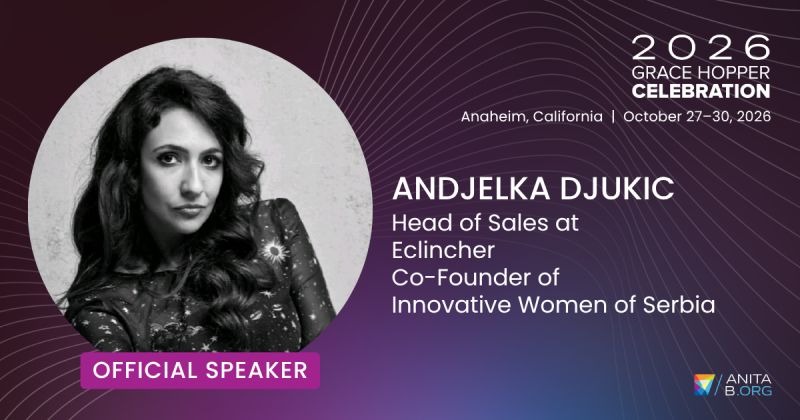
Speaking Engagements and 2026 Events
Andjelka is speaking at an upcoming Webinar with the NYEdTech group on June 8th, and at the NHRMA 2026 conference in Spokane, Washington, as well as the Grace Hopper Celebration 2026 in Anaheim, California, in late October. Additional speaking engagements in Europe are also planned for later this year.
Learn More About Andjelka Djukic
Readers can explore Andjelka Djukic’s professional work and leadership initiatives through her profile on LinkedIn. More information about her current work can also be found at Eclincher and Innovative Women of Serbia (IWS).
Biz Weekly Contributor
Covers business, technology, entrepreneurship, and the changing digital landscape.
This article features partner, contributor, or branded content from a third party. Members of the Biz Weekly editorial staff were not involved in the creation of this content. All views and opinions are those of the contributor alone.