How AccrediCulture Connects Healthcare Compliance
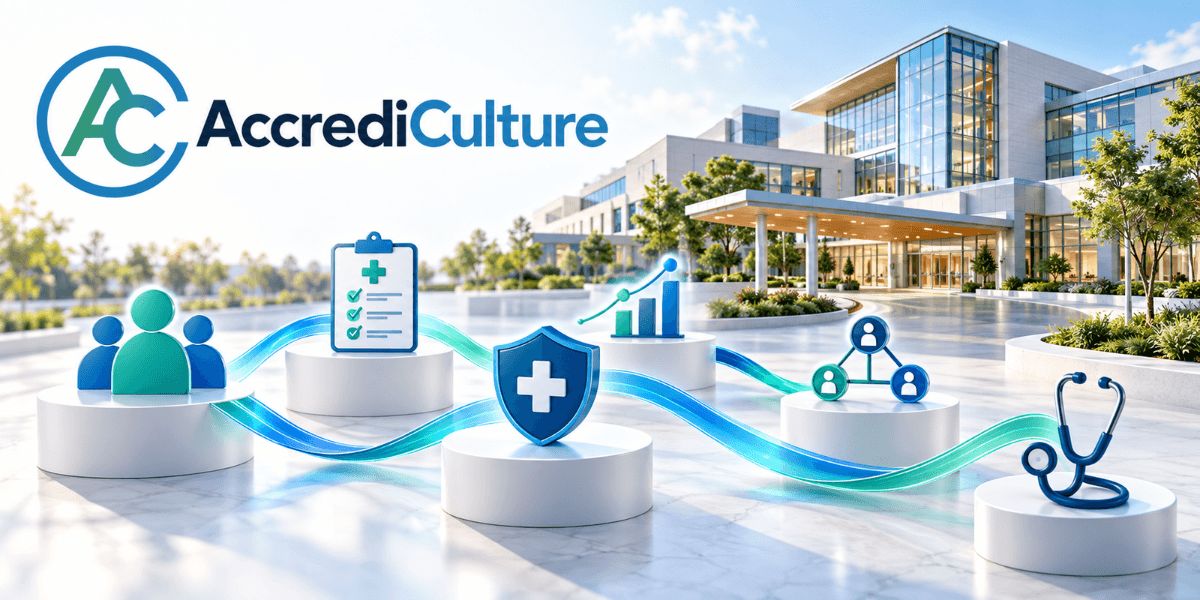
AccrediCulture links healthcare requirements to daily work, so improvement becomes visible and verifiable.
Every healthcare leader knows the quiet anxiety that comes before a question they cannot easily answer. A surveyor asks for proof that a problem was addressed. The information exists, somewhere. A training record lives in one system. An incident report sits in another. A corrective action is tracked on a spreadsheet that only one person fully understands. The evidence is real, but assembling it feels like detective work.
AccrediCulture was built to end that scramble. Founded by Sariah Hopkins, the company connects governance, risk, safety, assurance, workforce learning, and operations into one platform. Its purpose is simple to state and difficult to achieve: help healthcare organizations answer three essential questions. What needs attention? Who is responsible? And can we demonstrate that the problem was addressed?
From Scattered Records to a Connected Picture
Healthcare organizations collect enormous amounts of information. Yet that information often sits in separate systems, documents, and conversations. A completed training may be recorded in one place. An investigation happens in another. A corrective action is tracked somewhere else entirely. The result is a fragmented view of risk and readiness.
AccrediCulture brings those activities into a connected operational picture. Its capabilities span incident and grievance management, chart audits, corrective action plans, policies and procedures, learning management, credentials, emergency drills, inspections, environment of care, infection control, clinical supervision, and reporting. These workflows support clinical, behavioral, workforce, and operational concerns, from medication errors to emergency preparedness.
The company grew from firsthand experience in healthcare leadership and operations. That background shaped a platform designed around the practical, overlapping work healthcare teams face every day, rather than theory.
"Healthcare leaders should be able to follow a requirement all the way through to the person responsible, the action taken, and the evidence supporting it," said Matthew Clement, Client Success Manager.
Turning Completed Work Into Evidence
The clearest illustration of the AccrediCulture difference is the corrective action plan. Consider a demonstration scenario. An audit identifies a documentation gap. The response requires staff training and clinical supervision. In many organizations, proof of that work would need to be gathered manually from several sources.
Within AccrediCulture, the plan does the connecting. A corrective action can contain multiple findings, each with a required action, a responsible owner, a deadline, and evidence requirements. Training completions and supervision records contribute directly to automated evidence totals. Leaders can then examine the actual records behind a progress figure, not just a percentage on a dashboard.
The platform also preserves the context behind decisions. An incident report becomes more than a submitted form. It carries an assigned investigator, contextual discussion, documented findings, and links to completed investigations and after-action reports. The reasoning and communication behind a response stay alongside the record of what happened.
"A corrective action plan should show more than what an organization intends to do," Clement says. "It should show what has been completed, what remains outstanding, and the records behind that progress."
A Patent-Pending Approach to Regulatory Alignment
AccrediCulture holds a U.S. patent application pending for its novel approach to automating regulatory alignment. The innovation reflects the central problem the company set out to solve: connecting applicable requirements to the operational work and evidence that support them.
Healthcare requirements vary by location, service, and care setting. By bringing regulatory alignment closer to daily activities, AccrediCulture helps organizations demonstrate readiness as part of ordinary operations rather than a last-minute project.
"Our U.S. patent-pending approach to regulatory alignment reflects the problem we set out to solve: connecting complex requirements to the everyday work of healthcare," noted Chief Technology Officer, Benjamin Fillmore
Visibility That Scales
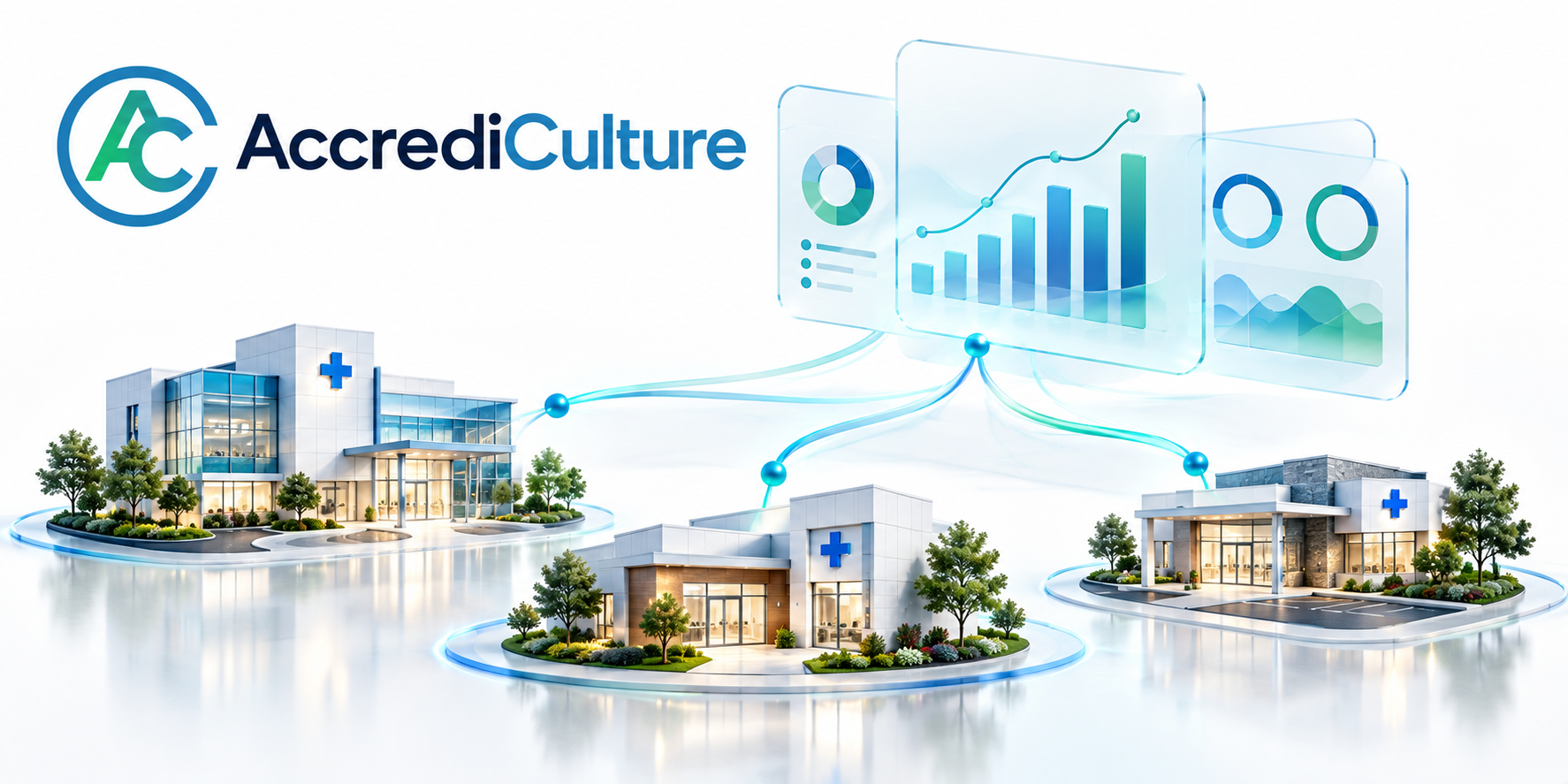
For organizations operating multiple sites, AccrediCulture provides visibility into both individual responsibilities and broader patterns. Frontline staff can see their own tasks. Leaders can compare locations, examine outstanding work, and follow findings through remediation. The approach centers on traceability: connecting a requirement or concern to the response, the responsible people, and the supporting evidence.
That capability matters most when organizations grow. One management services organization, Atlantic Health Strategies, used the platform to support oversight as its client base expanded to 150 customers. Its leaders describe the technology as foundational to that growth.
"AHS Advisors are the head and the heart, but AccrediCulture is the central nervous system," says Leah Kendall, Chief Compliance Officer at Atlantic Health Strategies. "It keeps our finger on the pulse of all of our clients and lets us know in a second if anything is going off track."
For organizations facing frequent accreditation activity, sustained readiness replaces last-minute panic. "With AccrediCulture we never worry about a survey," Kendall says. "It's not uncommon for us to have 10-12 accreditation surveys in a month, and AccrediCulture makes them a non-event."

Why It Matters
AccrediCulture has maintained a 100 percent customer retention rate, a figure that speaks to the practical value teams find in daily use. Multiple Joint Commission surveyors have described the company's forms as the best they have seen. That feedback represents individual perspectives, not endorsement by any accrediting body, and it reflects the operational understanding built into the platform.
Customers echo that sentiment in their own words. Michael Schaub of Aura Recovery rated ease of use "10 out of 10." Jessica Cash of Healing Rock Homes called one module "LIFE CHANGING."
The company's positioning reaches beyond preparing for a single survey. Its focus is continuous readiness: the ongoing management of the people, processes, and records that support healthcare quality, safety, and accountable operations. AccrediCulture supports organizations across all 50 U.S. states, Washington, D.C., Puerto Rico, and Guam, as well as providers operating under England's Care Quality Commission framework. The company's U.S. home office is in West Palm Beach, Florida, and AccrediCulture Ltd maintains a registered office in London.
The broader ambition is clear. "We want teams to spend less time piecing together proof and more time improving the systems that support safe, reliable care," Clement says.
Explore What Continuous Readiness Looks Like
If your organization still relies on scattered spreadsheets and disconnected systems to prove its readiness, there is a better way to work. AccrediCulture connects the requirement to the responsibility, the action to the evidence, and the individual record to organizational oversight. See how the platform can give your leaders a single, traceable view of quality, safety, and compliance across every site. Visit AccrediCulture to request a demonstration and learn how continuous readiness can become part of your everyday operations.
Explore More About AccrediCulture
Connect with AccrediCulture and on LinkedIn.
Biz Weekly Contributor
Covers business, technology, entrepreneurship, and the changing digital landscape.
This article features partner, contributor, or branded content from a third party. Members of the Biz Weekly editorial staff were not involved in the creation of this content. All views and opinions are those of the contributor alone.