Elevate AI CEO and University of Miami Professor Thiago E. Ferreira Reveals Why AI Adoption Stalls

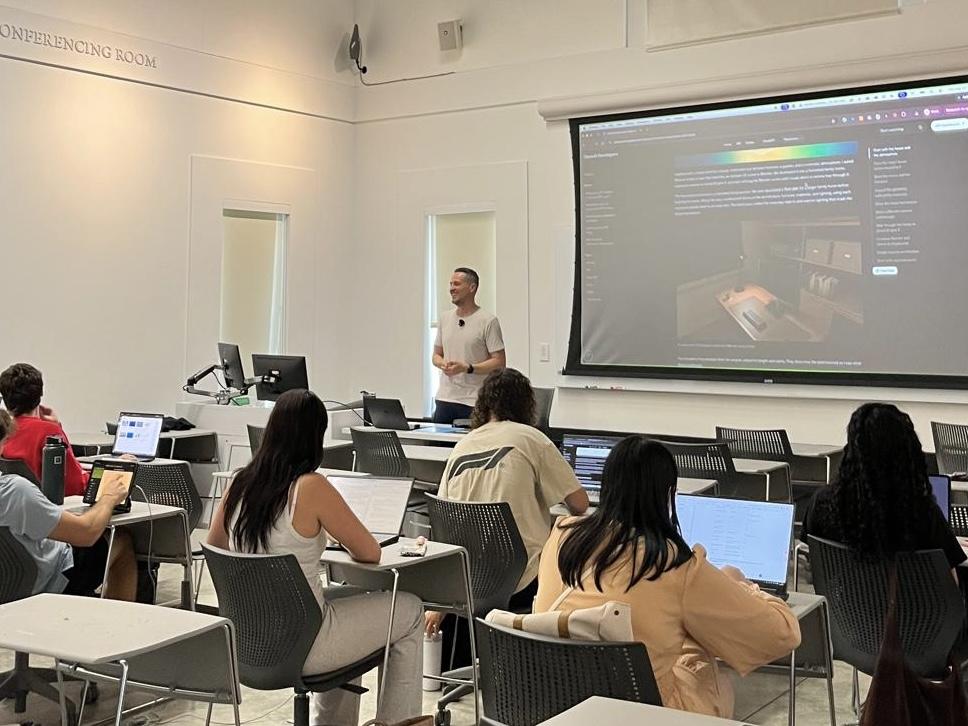
Thiago E. Ferreira, University of Miami adjunct professor and CEO of Elevate AI Consulting.
Thiago Ferreira explains why AI adoption stalls and how hands-on training and employee trust help businesses use AI effectively.
The same AI tool can produce two very different reactions. In a university classroom, students may rush to accept an answer without checking whether it is correct. In a corporate training room, employees may hesitate to use the same technology, worried about making mistakes or using it improperly. For Thiago Ferreira, founder and CEO of Elevate AI Consulting and an adjunct professor at the University of Miami, this contrast offers a valuable lesson about why AI adoption stalls.
Ferreira sees both reactions firsthand. Through his “Human-Centered AI” course at the University of Miami and his work leading corporate AI bootcamps, he uses the same practical exercises with students and professionals. Participants learn to verify AI-generated answers for errors, then build a small working application around a real task. The technology stays the same, but the challenges change. Students often move too quickly and place too much trust in AI output, while corporate teams may hold back because they fear getting it wrong. “My students trust AI too quickly. My corporate teams trust themselves too little. Same tool, opposite problems,” Ferreira says.
These opposing reactions reveal a shared problem. People are often taught what AI can do without learning how to work with it. A presentation can demonstrate impressive capabilities, but it cannot fully prepare someone to question an inaccurate answer, recognize a limitation, or apply a tool to a real business process. AI adoption requires more than technical awareness. It requires judgment, practice, and confidence.
Why AI Adoption Stalls Without Human Intelligence First
This lesson shapes the work of Elevate AI Consulting, a Miami-based firm that helps organizations adopt AI responsibly, build employee capabilities, and implement practical solutions. Its guiding principle, “Human Intelligence First,” reflects Ferreira’s belief that technology works best when people understand how to use it, verify its output, and make informed decisions.
The company provides corporate AI training and bootcamps, AI strategy consulting, process automation, custom AI agents, and governance support. Yet the underlying objective goes beyond introducing new tools. Elevate AI aims to help organizations turn AI capabilities into useful workflows while keeping human judgment central to the process.
That distinction matters because access to AI does not guarantee adoption. Employees may understand that a tool can draft content, analyze information, or automate repetitive tasks but still struggle to use it confidently. Some may accept its answers without checking them. Others may avoid experimenting because they fear making an error, exposing sensitive information, or appearing inexperienced in front of colleagues.
For Ferreira, these are not separate technology problems. They are learning and trust problems. Organizations must teach employees both how to use AI and how to recognize when its output needs closer examination. Without those skills, enthusiasm can become overconfidence, while caution can become resistance.
How Teaching Changed Elevate AI's Bootcamps
Ferreira’s experience in the classroom has directly influenced how Elevate AI Consulting delivers corporate training. Rather than spending most of a session explaining concepts and demonstrating tools, the company puts greater emphasis on hands-on building. Participants work through practical challenges, test AI responses, and create small solutions connected to real tasks.
“When people build something real in the first hour, the fear goes away. That’s why I cut presentation time and add building time,” Ferreira says.
The reasoning is straightforward. Building gives people an opportunity to experience AI rather than simply hear about it. They can see what works, discover where a result falls short, and learn how to improve it. This process also makes limitations easier to understand because participants encounter them directly instead of treating responsible AI use as an abstract principle.
Verification is a central part of that experience. An AI-generated answer may sound convincing while containing factual errors or missing important context. Participants therefore need to develop the habit of checking information rather than assuming that a polished response is a reliable one. They must also learn when to question an output, consult trusted sources, or apply their own expertise.
Just as important, Ferreira wants people to feel safe asking basic questions and making mistakes during training. A learning environment that treats uncertainty as part of the process gives participants more room to experiment and build confidence. Instead of expecting employees to master unfamiliar technology immediately, the approach helps them develop practical skills through repeated use.
Why Employee Trust Determines AI Adoption
The lessons from Ferreira’s classroom extend beyond how training sessions are structured. They also influence the kind of AI work Elevate AI Consulting accepts.
The firm declines engagements where the primary objective is replacing employees with AI. Its focus is on helping organizations use technology to grow their businesses, improve processes, and enable people to accomplish more. Ferreira sees workforce trust as essential to achieving those goals.
When employees believe an AI initiative threatens their jobs, they may be reluctant to participate fully. They might avoid testing new workflows, withhold practical insights, or resist changes they associate with job insecurity. Even capable tools can fail to deliver their intended value if the people expected to use them do not trust the process.
“I turn down work when the goal is replacing people. I’m proud to work with companies that are using AI to grow their businesses and hire more humans, not fewer,” Ferreira says.
This position does not dismiss automation or its potential to reduce repetitive work. Instead, it connects efficiency with a broader business purpose. Automating routine tasks can give employees more time to focus on customer needs, creative problem-solving, and other responsibilities that benefit from human judgment. The challenge is to implement those improvements in ways that support the workforce rather than undermine its confidence.
For businesses, the implication is clear: AI adoption cannot be measured solely by how many tools they introduce. Leaders must also consider whether employees feel prepared to use those tools, whether they understand how to verify the results, and whether the changes improve the work people do.
From AI Experiments to Practical Business Results
Elevate AI Consulting combines its hands-on training philosophy with implementation support designed to help organizations put AI into practice. Its corporate bootcamps explore role-specific applications, while its automation and custom AI services help teams develop workflows that reduce manual effort and improve execution.
The company reports that its bootcamps can explore up to 50 custom AI use cases per program. One published case study describes a Miami mobile devices bootcamp in which participants built six AI workflows and saved more than 10 hours per week each. These results illustrate the practical value of connecting training to real operational needs.
However, the broader lesson behind Ferreira’s approach is not simply that employees can save time with AI. It is that sustainable adoption requires people to understand the technology, verify its output, and feel confident enough to use it. Hands-on experience helps build those skills, while a human-centered strategy gives employees a reason to participate in the process.
As organizations continue exploring AI, Ferreira’s experience across university teaching and corporate training offers a useful perspective. Students who trust AI too quickly need to develop stronger verification habits. Employees who fear using it need opportunities to practice without judgment. Both groups benefit when learning moves beyond presentations and into real-world application.
Through its Human Intelligence First philosophy, Elevate AI Consulting helps organizations address these challenges with practical training, AI strategy, and implementation support. Businesses looking to move beyond AI experimentation can explore the company’s services and case studies at Elevate AI Consulting to learn how hands-on learning and responsible implementation can help their teams use AI with greater confidence.
Biz Weekly Contributor
Covers business, technology, entrepreneurship, and the changing digital landscape.
This article features partner, contributor, or branded content from a third party. Members of the Biz Weekly editorial staff were not involved in the creation of this content. All views and opinions are those of the contributor alone.