Nvidia Introduces Open AI Models Designed to Run Enterprise Agents
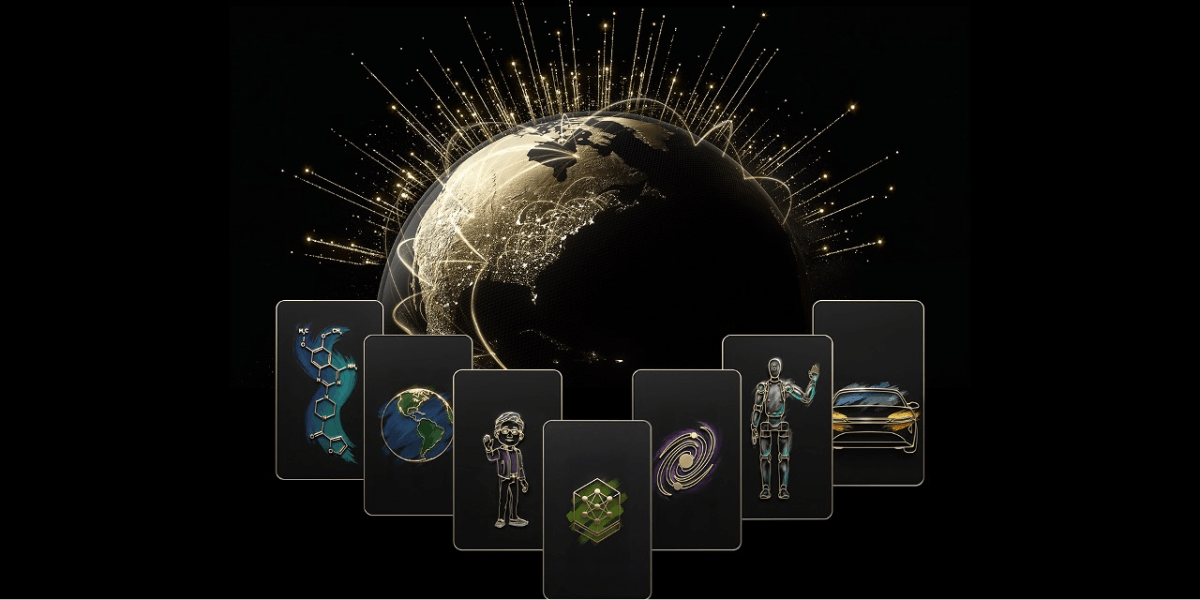
New open models from Nvidia reflect a broader shift toward AI systems that can carry out multistep tasks across business software and computing environments.
Nvidia introduced a new set of open artificial intelligence models designed to support AI agents in enterprise environments and on personal computers, adding to the growing competition over the software infrastructure that businesses will use to automate work.
The announcement, reported on October 19, comes as companies increasingly explore AI systems that do more than answer questions or generate text. Agent-based tools are designed to carry out multistep tasks, interact with software, retrieve information and support workflows that traditionally require repeated human input.
The distinction matters for businesses evaluating how AI may affect productivity, operating costs and technology strategy. As models become more capable of supporting complex workflows, companies must consider not only the quality of the output but also security, reliability, integration and the limits of automated decision-making.
From Chatbots to Task-Oriented Systems
Early generative AI adoption often centered on drafting text, summarizing documents and answering questions. Those uses can save time, but they typically leave employees responsible for moving information between systems and completing the next steps themselves.
AI agents aim to take on more of that operational work. Depending on their design and permissions, they may be able to search for information, use software tools, organize tasks or coordinate multiple steps toward a defined objective.
For example, an enterprise agent could assist with compiling information from internal documents, preparing a report and checking the report against a set of requirements. In another workflow, an agent could help a developer inspect code, identify potential problems and propose changes for review.
Such applications depend on more than a model’s ability to generate plausible text. The system must understand the task, use tools appropriately, keep track of intermediate results and avoid actions that exceed its authority. Mistakes can become more consequential when an agent can change files, access sensitive information or initiate business processes.
Why Open Models Matter
Open models can give developers and organizations greater flexibility to evaluate, adapt and deploy AI systems within their own technology environments. Depending on the model’s license and technical requirements, companies may be able to customize applications, choose where inference takes place and integrate the model with existing infrastructure.
That flexibility can be attractive to organizations with specialized requirements or strict data-handling rules. Some businesses may prefer to run certain workloads on their own systems rather than send all information to a third-party service.
However, open availability does not automatically make a model inexpensive, secure or easy to operate. Organizations still need computing resources, skilled technical teams, monitoring, access controls and procedures for evaluating performance. Running a model locally or in a private environment can also create maintenance responsibilities that a managed service would otherwise handle.
Nvidia’s position in accelerated computing gives it a significant role in this market. Businesses building AI applications need both models and the hardware infrastructure required to run them. By offering models designed for agent workflows, the company can strengthen the connection between its computing platforms and the software developers build on top of them.
Enterprise Adoption Depends on Trust
Companies considering agent-based AI must evaluate the risks associated with granting software the ability to act. An agent that summarizes a document may create limited operational risk if its answer is checked. An agent that sends customer messages, modifies records or changes system settings can have a more direct impact on the business.
Security teams therefore need to understand what data an agent can access, which tools it can use and what actions require human approval. Permissions should be limited to the tasks the system is intended to perform, and important actions should be logged so that organizations can review what happened.
Reliability is another concern. AI systems can misinterpret instructions, make unsupported assumptions or produce results that appear confident but are incorrect. A multistep workflow can compound these problems if an early mistake affects later actions.
Businesses may need to begin with narrowly defined tasks, test performance against realistic scenarios and introduce human review where errors could cause significant harm. The value of automation should be measured against the time and cost of monitoring, correcting and maintaining the system.
Competition Across the AI Infrastructure Market
The release reflects a broader race among technology companies to provide the building blocks for enterprise AI. Model developers, cloud providers, software companies and hardware suppliers are all competing to influence how organizations deploy intelligent systems.
The market includes closed services offered through hosted platforms as well as models that developers can run or adapt themselves. Each approach involves trade-offs involving cost, control, performance, privacy and operational complexity.
For enterprise buyers, the choice is unlikely to be identical across every workload. A company may use a managed model for one application, an internally hosted model for sensitive tasks and conventional software for processes that require predictable, rule-based behavior.
That mixed approach could become more common as businesses test agent systems against specific operational needs. The ability to integrate models with existing tools may matter as much as raw benchmark performance.
Measuring Business Value
The commercial case for AI agents rests on whether they can complete useful work reliably and at a reasonable cost. Faster task completion is only one measure. Companies also need to assess error rates, security exposure, employee training requirements and the effort needed to maintain the system.
Organizations should be cautious about treating demonstrations as proof of broad readiness. Performance in a controlled setting may not reflect the complexity of real business operations, where data can be incomplete and workflows often contain exceptions.
Nvidia’s open-model announcement adds another option for developers exploring agent-based systems. Its broader significance lies in the movement from AI as a conversational interface toward AI as a tool for executing defined tasks.
Whether that shift produces lasting productivity gains will depend on implementation. Businesses that establish clear boundaries, verify outputs and connect AI to well-designed workflows may be better positioned to realize value than those that deploy agents without adequate controls. The technology is advancing, but adoption will ultimately be determined by measurable performance, cost and trust.
Biz Weekly Contributor
Covers business, technology, entrepreneurship, and the changing digital landscape.
This article features partner, contributor, or branded content from a third party. Members of the Biz Weekly editorial staff were not involved in the creation of this content. All views and opinions are those of the contributor alone.