An Ontario innovator links AI, clean energy, food security, and humanitarian purpose.
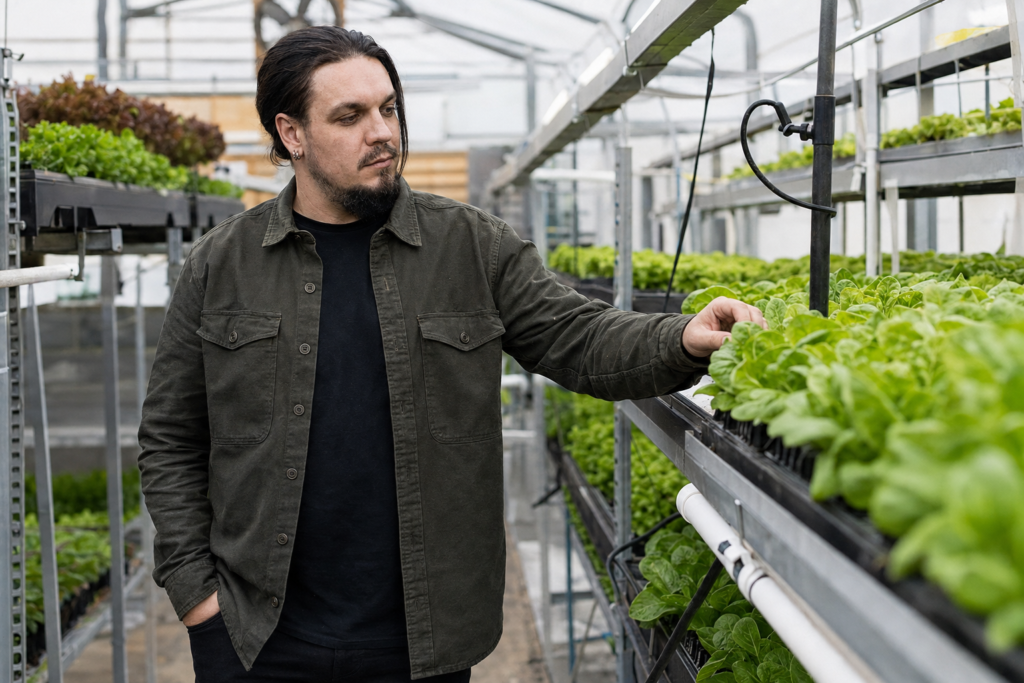
The problem did not look like one problem. It looked like many: energy systems stretched thin, food insecurity rising, organizations short on staff, communities looking for resilient infrastructure, and innovators working in separate rooms on pieces of the same puzzle. For Jaryd Bellas-Menzie, founder and CEO of The Faciem-Valorem Corporation, that separation was the warning sign. The Faciem-Valorem Corporation, also known as The F.V.C., was built on a different belief: lasting solutions must connect the systems that shape daily life.
The Faciem-Valorem Corporation Builds An Ecosystem
Founded in Ontario, The Faciem-Valorem Corporation presents itself not as a conventional single-sector venture, but as a Canadian AI company and sustainable technology company shaped by the principle “Face Your Worth, Face-Value.” Its work spans artificial intelligence, clean energy, regenerative agriculture, controlled-environment food production, accessibility, digital automation, sustainable infrastructure, and community development. The company’s long view is captured by another guiding phrase, “The Future Begins Here!”
That future, in Bellas-Menzie’s view, cannot be built through isolated tools. “Food, energy, employment and sustainable communities are not separate challenges. They are parts of the same system, and our solutions must be just as connected,” he says. The statement explains why The F.V.C. is developing AI-powered workforce and business platforms alongside clean-energy research, agricultural technology concepts, and social-impact initiatives.
The company’s operating model is as important as its portfolio. Bellas-Menzie leads The F.V.C. as a lean, AI-supported organization, using specialized AI systems to assist with research, planning, communications, product development, and administration. Students, volunteers, nonprofit partners, and international collaborators extend that capacity. In practice, the model allows a small organization to coordinate work that would often be divided among several firms.
Yet Bellas-Menzie is careful to frame AI as an amplifier, not a replacement for judgment. “AI is not the mission. It is a tool that allows a small, determined team to pursue a mission much larger than itself.” That distinction matters. The F.V.C. is not selling automation as a shortcut around responsibility. It is using automation to give human purpose more reach.
The Faciem-Valorem Corporation Looks Beyond Earth
One of the clearest examples of that systems-based thinking is the Lunar Waste Management and Resource Recycling System, known as LWRRS. The concept was developed in support of the possible long-term needs of a future Artemis lunar base. It explores how waste streams could be processed into reusable materials and resources within a closed-loop environment. It should not be described as an officially adopted NASA system. Rather, it is a forward-looking sustainability concept aimed at one of space exploration’s hardest questions: how people might live where resupply is limited.
The idea also points back to Earth. If a closed-loop system can be imagined for the Moon, the same mindset can help communities confronting scarcity here. Clean energy, food production, housing, employment, and waste reduction all overlap when resources are limited. “If we can design closed-loop systems capable of supporting people on the Moon, we should apply that same ingenuity to communities struggling here on Earth,” Bellas-Menzie says.
His background helps explain the blend of ambition and practicality. Bellas-Menzie brings experience across horticulture, food and farming, skilled trades, construction, technology, artificial intelligence, and community leadership. That range gives The F.V.C. a grounded approach to innovation. Instead of beginning with technology alone, the company looks at operational friction: how food is grown, how energy is supplied, how organizations manage limited labor, and how digital systems can lower barriers for smaller teams.
His completed achievements include serving as one of 24 judges for the Plant the Moon and Plant Mars Challenge, an international educational initiative connected to NASA and the SSERVI community that has involved tens of thousands of participants. His work involving artificial intelligence, agricultural technology, and food sustainability has also received international recognition through the Global Food Security Summit, including an award associated with the United Nations and the Food and Agriculture Organization.
In Canada, Bellas-Menzie and The F.V.C. have received multiple TELUS award nominations, with results and related recognition anticipated on October 15, 2026. Those nominations are not being presented as awards already won. They do, however, signal external attention around the company’s entrepreneurship, perseverance, and commitment to using innovation for public benefit.
The Faciem-Valorem Corporation Turns Mission Into Work

The humanitarian side of The Faciem-Valorem Corporation is not a footnote to the technology story. It is part of the company’s definition of value. The F.V.C. serves as a spiritual parent and international supporter of Meta Church and Orphanage in Kenya, a community with more than 300 church attendees and 68 orphaned children. That relationship has helped expand awareness and support around rice supplies, essential food needs, and long-term opportunities for the children.
The effort has grown beyond Canada and Kenya. Two combat-sports gyms in Thailand have joined the support network, helping contribute to rice and essential food-supply initiatives. It is a small but telling example of how The F.V.C. sees collaboration: not as a branding exercise, but as a way to connect people with needs, skills, and practical resources across borders.
Other developing collaborations reflect the same pattern. With Power From Within Clean Energy Society in Ontario, an Indigenous nonprofit, The F.V.C. has contributed knowledge and planning related to clean energy, controlled-environment agriculture, sustainable-community development, education, and inclusive housing concepts. These are best understood as developing case studies and documented collaborations, not exaggerated claims of completed large-scale deployment.
Commercially, The F.V.C. is also building AI and digital business solutions intended to help users and emerging organizations access website development, AI-assisted business tools, automation, and administrative support without needing several disconnected providers. The benefit is straightforward: organizations with limited resources can increase capability, reduce complexity, and focus more of their energy on serving customers, members, or communities.
What makes the company unusual is the distance between its current scale and the size of the problems it is willing to engage. The F.V.C. is still an early-stage innovation company, but it is not thinking small. Its portfolio includes active work, developing platforms, partner initiatives, future concepts, and long-term goals. That distinction is important. It also makes the company more credible, because serious innovation requires honest boundaries as well as bold vision.
Bellas-Menzie summarizes the standard this way: “I do not want to build technology simply because it is possible. I want to build technology because people need better options.” In a market crowded with tools, that sentence separates The F.V.C. from companies chasing novelty alone. Its thesis is that the strongest ventures of the next decade will solve connected problems with connected systems.
For business leaders, nonprofit partners, educators, sustainability advocates, and communities seeking practical innovation with a human center, The Faciem-Valorem Corporation offers a model worth studying. Explore its work to see how AI and food security, Canadian clean-energy innovation, agricultural technology, and social-impact technology can move together with purpose, accountability, and measurable value. Connect with The Faciem-Valorem Corporation, LinkedIn, Facebook, Instagram, and Jaryd Bellas-Menzie.