Why MindNote Is Redefining AI Notetaking
Tomya Mateo built MindNote to turn scattered inputs into organized, searchable knowledge.
The first version of MindNote did not begin as a polished productivity platform. It began as an experiment. Tomya Mateo was exploring an ambitious idea, brain-to-text technology, while building an internal tool for another project. The tool had a simple purpose: capture thought faster, shape it into usable notes, and reduce the friction between an idea and the moment it becomes clear. Then something changed. What started as a passion project began solving a problem far larger than the one it was built for. Students needed cleaner lecture notes. Founders needed faster meeting summaries. Researchers needed a better way to organize interviews, sources, and scattered insights. By May 2025, MindNote had become a stand-alone product, and the MindNote AI notetaker entered a crowded market with a sharper promise: help people capture knowledge from almost any format and turn it into organized work.
The Origin Of The MindNote AI Notetaker
Mateo’s early instinct was practical. Most people do not struggle because they lack ideas. They struggle because ideas arrive in messy forms. A voice memo on a walk. A YouTube lecture at midnight. A screenshot from a research paper. A meeting that runs long. A paragraph that needs to become a table, a summary, or a polished brief. Traditional note apps often ask users to slow down and fit their thinking into rigid boxes. MindNote was designed to do the opposite. It meets users where their information already lives, then helps them transcribe, translate, edit, organize, and export it.
That mission explains why MindNote is not only a writing tool. It is an AI-powered workspace for students, entrepreneurs, B2B teams, academic researchers, and knowledge workers who produce more text than they have time to manage. The platform supports text, prompts, voice, video, video links, images, and meeting transcription. Users can paste a YouTube URL and convert spoken material into editable notes. They can dictate ideas in multiple languages. They can extract typed or handwritten text from images. They can also use AI prompts to summarize, translate, alphabetize, reformat, or refine raw material with a tap.
The breakthrough was not one feature. It was the decision to make the input layer flexible. Many notetaking tools begin with a blank page. The MindNote AI notetaker begins with the reality of modern work: knowledge arrives through calls, videos, lectures, conversations, documents, and screenshots. By accepting multiple formats, MindNote reduces the gap between capture and creation. That matters because the real cost of poor notes is rarely the note itself. It is the lost idea, the missed detail, the slow follow-up, and the mental fatigue of reconstructing what mattered.
How MindNote AI Notetaker Serves Modern Work
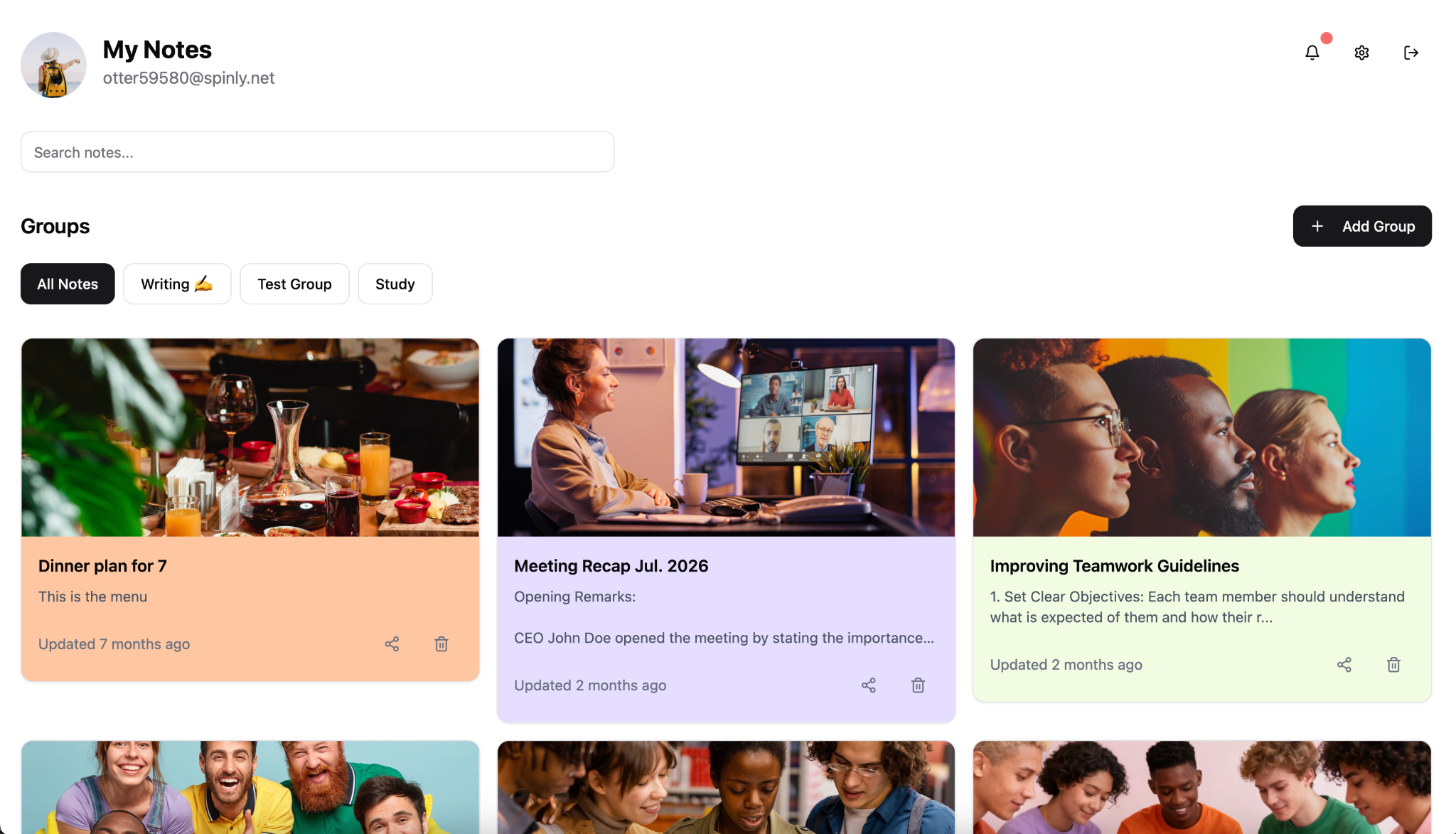
Since launch, MindNote has gained early traction, with more than 2,000 users across Web, Android and iOS and 60 percent of mobile users using MindNote daily. By its third month, the platform had also attracted paid customers. MindNote is also currently running a fundraising campaign through Artizen and has raised $18,000 so far. More information about the campaign is available on the Artizen campaign page. These developments reflect MindNote's continued expansion across individual and business use cases as the company develops its product and B2B offering. For a young product, those signals matter. They suggest that MindNote is not being treated as a curiosity. It is being used as part of a real daily workflow.
For students, the value is easy to see. A lecture can become a searchable study document. A YouTube explanation can become editable notes. A spoken idea can become a draft for an assignment. Text-to-voice playback lets students listen while reviewing, commuting, or multitasking. Color coding, folders, rich media, and grouped notes help users create a study system that feels personal rather than clinical.
For entrepreneurs, the MindNote AI notetaker solves a different but equally urgent problem: speed. Founders live inside conversations. Customer calls, investor prep, product ideas, marketing angles, operations notes, and team huddles often happen faster than anyone can document them. MindNote helps turn those moments into usable records. A founder can dictate a product idea, transcribe a meeting, summarize a long discussion, and export the result as a PDF, DOC, CSV, Excel file, Markdown document, or shareable link. The benefit is not merely cleaner notes. It is faster execution after the conversation ends.
For B2B teams, MindNote is built around collaboration, continuity, and turning information from meetings and other inputs into structured knowledge. The company is currently running a B2B pilot program for companies, while its meeting transcription supports live and virtual meetings through Zoom, Google Meet, and Microsoft Teams, with Slack Huddles planned. Teams can use private and public notes, shared notes, cloud sync, advanced search, and AI assistance to keep decisions visible. In many companies, information gets trapped in calendars, chats, and scattered documents. MindNote gives teams a way to convert those fragments into records that can be searched, refined, and shared.
For researchers, the product becomes a synthesis engine. Interviews can be transcribed. Images can yield text. Notes can be grouped by theme, color, or project. Long material can be condensed without losing the original context. In academic and professional research, time often disappears into formatting, review, and organization. MindNote’s strength is that it treats structure as part of the writing process, not an afterthought.

Why MindNote AI Notetaker Stands Apart
MindNote enters a competitive category, but its differentiation is direct: users can input information in almost any form. Text, prompt, voice, video, video link, image, and meeting transcription all belong in the same workflow. That flexibility creates a more natural relationship between the user and the product. Instead of asking, “Where should I put this?” users can ask, “What do I want this to become?”
The platform’s pricing also reflects a simple adoption strategy. MindNote offers a monthly plan at USD 9.99 per month with a three-day free trial, and a yearly plan at USD 100 per year with a three-day free trial and a stated 16 percent savings. Both plans are positioned around unlimited notes, shared notes, AI assistance, advanced search, cloud sync, and access to future features. An interactive demo is available without signup, which lowers the barrier for users who want to understand the experience before committing.
There is also evidence that MindNote is moving beyond a quiet launch. The product has been pitched on Venture Miner, has partnerships with DealMirror, Oncely, and DealFuel, and has public review profiles on Trustpilot and LeadRPro. These early visibility markers matter because productivity software depends on trust. Users are not just choosing an app. They are choosing where their ideas, meetings, research, and work momentum will live.
Still, MindNote’s most important story is human. It is the story of a founder who built something internally, noticed a wider need, and chose to turn the tool outward. The company’s promise is not that AI replaces thinking. It is that AI can remove the slow, repetitive steps that keep people from thinking clearly. In that sense, MindNote is less about replacing the notebook and more about reimagining what a notebook can do in 2026.
For anyone who writes often, studies deeply, leads meetings, builds companies, or manages research, the next productivity gain may not come from working longer. It may come from capturing better. Explore the MindNote AI notetaker, test the demo, and see how quickly scattered inputs can become organized, editable, and shareable knowledge.
Explore More About MindNote
Discover MindNote today and experience how it can improve the way you work and learn. Visit MindNote Online or try the app on Google Play for a 3-day free trial and start optimizing your productivity.
- Try MindNote on Google Play: MindNote on Google Play
- Visit the Official Website: MindNote Online
- Follow MindNote on YouTube: MindNote YouTube Channel
- Read User Reviews on Trustpilot: MindNote on Trustpilot
Discover MindNote today and experience how it can improve the way you work and learn.
Biz Weekly Contributor
Covers business, technology, entrepreneurship, and the changing digital landscape.
This article features partner, contributor, or branded content from a third party. Members of the Biz Weekly editorial staff were not involved in the creation of this content. All views and opinions are those of the contributor alone.