Virtual Dispatcher Helps Home Service Companies Capture The Calls That Used To Get Away
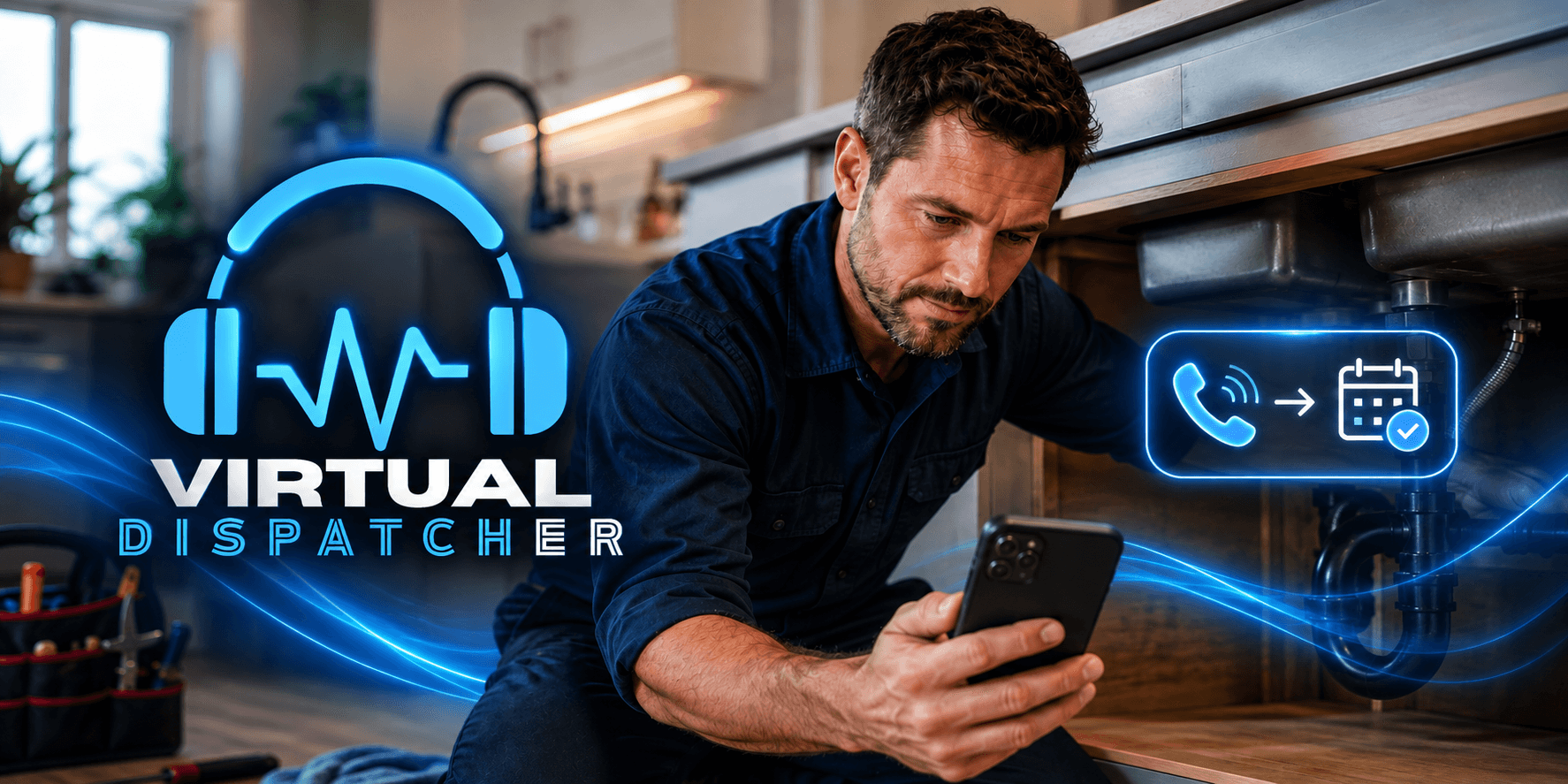
Virtual Dispatcher gives home service businesses an AI receptionist that answers calls, qualifies customers, and books jobs around the clock.
The phone rings at 9:17 on a Saturday night. A homeowner has discovered water where it should not be, and the problem cannot wait until Monday morning. At the plumbing company across town, the owner is finally home after a full day of service calls. The office is closed. Nobody picks up. Within minutes, that homeowner is calling another company. For home service businesses, this is the quiet cost of an unanswered phone, and it is the problem Virtual Dispatcher was built to address.
Virtual Dispatcher Turns Missed Calls Into Opportunities
Plumbing, HVAC, electrical, roofing, landscaping, pest control, and other home service businesses operate in a world where customer demand rarely follows office hours. Contractors may invest in search visibility, advertising, referrals, and other forms of lead generation, but those efforts still depend on one critical moment: someone answering when a prospective customer calls.
Virtual Dispatcher is an AI receptionist platform created specifically around that challenge. According to the company, its system can answer calls 24 hours a day, qualify customers, collect information, book appointments when configured to do so, and follow the individual business's call handling rules. It also provides after hours coverage, helping businesses remain responsive when employees are unavailable.
The concept is simple. Instead of allowing an incoming call to become another missed notification, Virtual Dispatcher gives the caller somewhere to go next.
That distinction matters for smaller service companies. An owner may be underneath a sink, inspecting an HVAC system, driving to another appointment, or speaking with an existing customer when the next lead arrives. Hiring enough office employees to provide continuous coverage may not be practical. Yet expecting customers to wait for a callback can be equally unrealistic.
Beyond The Traditional Answering Service
Answering services have existed for decades. What AI changes is what can happen during the conversation.
Virtual Dispatcher is designed to do more than record a caller's name and telephone number. The platform can gather details about why someone is calling, qualify the inquiry, answer according to configured business information, and move the customer toward an appropriate next step.
For example, a plumbing customer might report a leak, clogged drain, or failed water heater. An HVAC customer might explain that the furnace has stopped working or the air conditioner is no longer cooling. Virtual Dispatcher can collect those details while following the company's services, hours, service areas, frequently asked questions, and instructions.
When appointment booking is enabled, a qualified conversation can also become a scheduled visit. The company's Command Center gives businesses access to call activity, appointments, customer information, transcripts, and recordings, allowing employees to see what happened and step in when necessary.
This creates a different relationship between automation and the people already running the company. The technology does not have to eliminate the human relationship. Instead, it can cover the moments when a human employee simply cannot reach the phone.
Why After Hours Coverage Matters
Nights and weekends expose one of the most difficult operational gaps for home service companies.
Owners can remain personally available, hire additional staff, use a conventional answering service, or accept that some calls will go unanswered. Each option comes with a tradeoff.
Virtual Dispatcher offers another approach. A business can use the platform for continuous coverage or make it part of a broader front office workflow. Existing business numbers can be forwarded to a Virtual Dispatcher number, allowing companies to add AI call handling without requiring customers to learn a completely different phone number.
That flexibility also makes a hybrid approach possible. A company can maintain its existing team while using AI to strengthen coverage during busy periods, evenings, weekends, or other times when employees are less likely to answer immediately.
For contractors, that can turn AI from an abstract technology trend into something much more practical: a tool that picks up the phone.
Getting More From The Leads A Business Already Generates
The value of an AI receptionist is not limited to generating new demand. In many cases, the bigger opportunity may be helping a company respond to demand it has already paid to create.
Imagine a contractor investing in digital advertising, search engine optimization, direct mail, referrals, or other marketing. Those campaigns may successfully convince a homeowner to call. But if the call arrives while everyone is occupied, the marketing has only completed half of its job.
Virtual Dispatcher approaches the phone as part of the customer acquisition process. Its current AI receptionist service includes customer qualification, appointment booking, missed call text back, call recordings and transcripts, and after hours call handling. Businesses can also configure knowledge about their services and operating rules so the receptionist reflects how that particular company works.
The company has expanded that idea into additional service levels focused on follow up, customer communication, scheduling, dispatch, and other front office functions. The larger vision is not simply to answer calls, but to reduce the operational gaps that can appear between the first customer inquiry and the completed job.
Bringing Bigger Business Capabilities To Smaller Teams
Large service organizations have long had access to dedicated call centers, dispatchers, extended office hours, and sophisticated customer management systems. Smaller contractors often operate differently. The same person selling jobs in the morning may be solving customer problems in the afternoon and returning calls at night.
AI is beginning to narrow that operational gap.
A five person plumbing or HVAC company may never need a traditional 24 hour call center. It may, however, benefit from providing customers with an immediate response at 10 p.m. The ability to automate specific front office tasks can give a smaller operation capabilities that previously required more staffing and infrastructure.
That is also where AI receptionists will face their real test. Contractors are unlikely to judge the technology because it sounds futuristic. They will judge it on practical outcomes. Does it understand callers? Does it collect useful information? Does it follow the company's rules? Can it book correctly? Can employees review what happened? Does it know when a call requires a different response?
Virtual Dispatcher has been designed around those everyday questions rather than AI for its own sake.
Make The Next Ring Count
For home service businesses, the incoming phone call remains one of the most important moments in the customer journey. A homeowner may have spent several minutes searching for a company, reading reviews, comparing options, and deciding whom to trust. When that person finally calls, responsiveness can shape what happens next.
Virtual Dispatcher is betting that AI can help small and growing service businesses become more available without forcing owners to personally remain attached to their phones around the clock.
Contractors interested in seeing how an AI receptionist could fit into their existing call flow can explore Virtual Dispatcher, review its current capabilities, and experience how the system handles a sample customer conversation.
The technology behind the phone may be changing, but the business principle is familiar: when a customer reaches out, being there to answer still matters.
Biz Weekly Contributor
Covers business, leadership, and entrepreneurship, highlighting emerging companies and the people behind them.
This article features partner, contributor, or branded content from a third party. Members of the Biz Weekly editorial staff were not involved in the creation of this content. All views and opinions are those of the contributor alone.