U.S. Business Growth Slows in November as Higher Costs and Capacity Constraints Challenge Companies
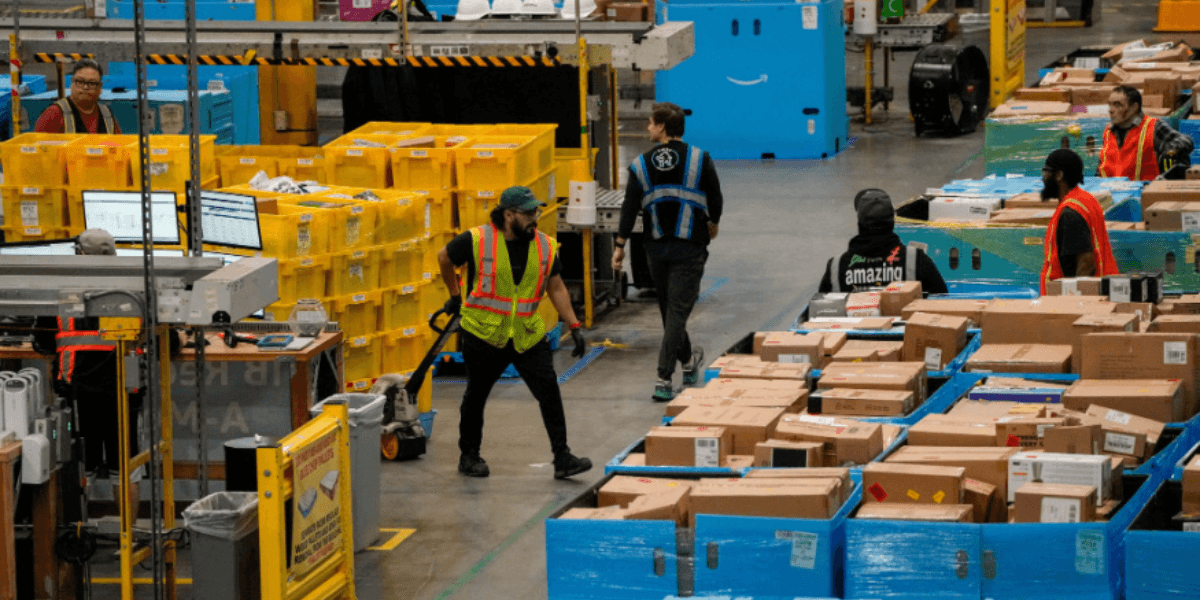
U.S. business activity continued expanding in November, but preliminary PMI data showed slower growth and persistent cost pressures.
Business activity across the United States continued to expand in November, although growth slowed from the previous month as companies faced higher operating costs, capacity constraints, and weaker increases in new orders.
Preliminary data released by S&P Global on November 23 showed that the U.S. Composite Purchasing Managers' Index Output Index declined to 54.6 from 55.9 in October. Although the reading remained above the 50-point threshold separating expansion from contraction, it represented the slowest rate of business activity growth since July.
The findings provide an important snapshot of economic conditions entering the final weeks of the year, when businesses are balancing holiday demand, operating expenses, staffing requirements, and expectations for the coming months.
Business Expansion Continues at a Slower Pace
The November composite reading indicated that private-sector activity continued growing, but at a more moderate rate.
The manufacturing and services sectors both recorded slower expansion. Manufacturing activity registered a flash PMI reading of 54.5, compared with 54.9 in October, while the services business activity index declined to 54.7 from 56.1.
The services sector represents a substantial portion of the U.S. economy, making its performance particularly important for overall business conditions.
The figures indicate that economic activity remains resilient despite the moderation in growth. However, the direction of the latest readings suggests that businesses are no longer expanding at the same pace observed during earlier months.
S&P Global's survey also indicated that growth in new orders weakened for a second consecutive month, reaching its slowest level since July.
The figures are preliminary survey results and should be interpreted as indicators of business conditions rather than final measurements of national economic output.
Capacity Constraints Affect Business Operations
One of the notable findings involved operating capacity.
Companies reported increasing pressure from existing workloads, with backlogs rising across manufacturing and services.
When businesses receive orders faster than they can complete them, unfinished work accumulates. This can indicate strong demand, but it can also expose limitations involving staffing, equipment, production capacity, and supply availability.
The November survey suggested that these pressures contributed to slower output growth.
Businesses responded by increasing staffing in an effort to address accumulated work. Employment continued expanding, although the rate of job creation moderated for a second consecutive month.
Manufacturing companies recorded particularly strong employment gains, while services businesses also continued hiring at a slower pace.
The relationship between staffing and production capacity remains important for business planning. Additional employees can help companies complete existing orders, but recruitment also increases labor expenses and requires adequate demand to justify longer-term commitments.
Inflation and Operating Expenses Remain Concerns
The survey also highlighted continuing pressure from prices.
Both input costs and selling prices increased at slower rates during November, but inflation remained elevated.
Input costs include expenses associated with materials, energy, transportation, labor, and other resources required to operate a business.
When these expenses increase, companies must decide whether to absorb the additional costs, improve operating efficiency, renegotiate supplier arrangements, or adjust customer pricing.
The ability to pass higher costs to customers varies across industries.
Businesses operating in competitive markets may have limited pricing flexibility, while companies with stronger demand or specialized products may have greater room to adjust prices.
S&P Global reported that concerns involving affordability and supply disruptions continued weighing on business growth prospects.
These conditions create a complicated operating environment for executives, who must maintain customer demand while protecting margins.
Manufacturing and Services Show Different Pressures
The manufacturing and services sectors experienced different combinations of demand and operational challenges.
Manufacturers continued to benefit from rising output and new orders, although growth moderated compared with previous months.
Some businesses reported support from new products, sales and marketing activities, and purchasing decisions influenced by concerns about future costs.
However, manufacturing companies also faced capacity constraints and supply-related challenges.
The services sector experienced a more noticeable slowdown in new business activity.
Survey respondents associated weaker demand with customer uncertainty, elevated prices, and the influence of higher interest rates on purchasing decisions.
Because services account for a large share of American economic activity, changes in this sector can influence employment, household spending, and business confidence.
The divergence between manufacturing and services demonstrates why the composite index must be considered alongside its individual sector readings.
Employment Remains an Important Indicator
Despite the moderation in overall activity, employment continued increasing across the private sector.
Companies reported hiring additional personnel to address backlogs and maintain operating capacity.
However, slower job creation suggests that businesses may be becoming more cautious about expanding their workforces.
Employment decisions involve long-term commitments, particularly for companies operating with narrow margins or uncertain demand.
Executives must assess whether increased staffing requirements reflect temporary order fluctuations or sustained business expansion.
For smaller businesses, hiring decisions can be particularly challenging because recruitment, training, compensation, and employee retention all affect operating budgets.
The November results therefore present a mixed picture: businesses are still adding employees, but they are doing so in an environment of moderating demand and persistent cost pressure.
Implications for Business Planning
The November PMI findings have implications for companies preparing their budgets and operational strategies for the next business cycle.
Manufacturers may need to evaluate production capacity, supplier reliability, and inventory requirements. Service providers may place greater emphasis on customer retention, workforce efficiency, and the management of operating expenses.
Businesses in both sectors must also consider how pricing decisions affect competitiveness and profitability.
The latest survey suggests that companies cannot rely exclusively on strong demand to offset operational challenges.
Capacity planning, productivity, workforce management, and cost control remain important considerations even while the economy continues expanding.
The findings also provide context for financial institutions and business leaders assessing economic conditions. PMI readings are widely followed because they offer timely information about changes in private-sector activity before several official economic indicators become available.
A Measured Outlook for the Business Community
S&P Global's November survey does not indicate a contraction in U.S. business activity. The composite reading remains above 50, and employment continues expanding.
However, slower output and order growth, alongside elevated prices and capacity constraints, suggest that companies are operating in a more demanding environment.
For business professionals, the central development is the contrast between continued expansion and increasing operational pressure.
The November 23 report highlights an economy that remains active but is experiencing moderation across important sectors. Its findings reinforce the importance of monitoring customer demand, production capacity, hiring requirements, and operating expenses as companies prepare for the coming year.
Source references: S&P Global's November 23, 2026 Flash U.S. PMI report and Reuters' November 23 coverage of the preliminary business activity findings.
Biz Weekly Contributor
Covers business, leadership, and entrepreneurship, highlighting emerging companies and the people behind them.
This article features partner, contributor, or branded content from a third party. Members of the Biz Weekly editorial staff were not involved in the creation of this content. All views and opinions are those of the contributor alone.