LifeOS by Venturis 13 Unifies Intelligence and Execution
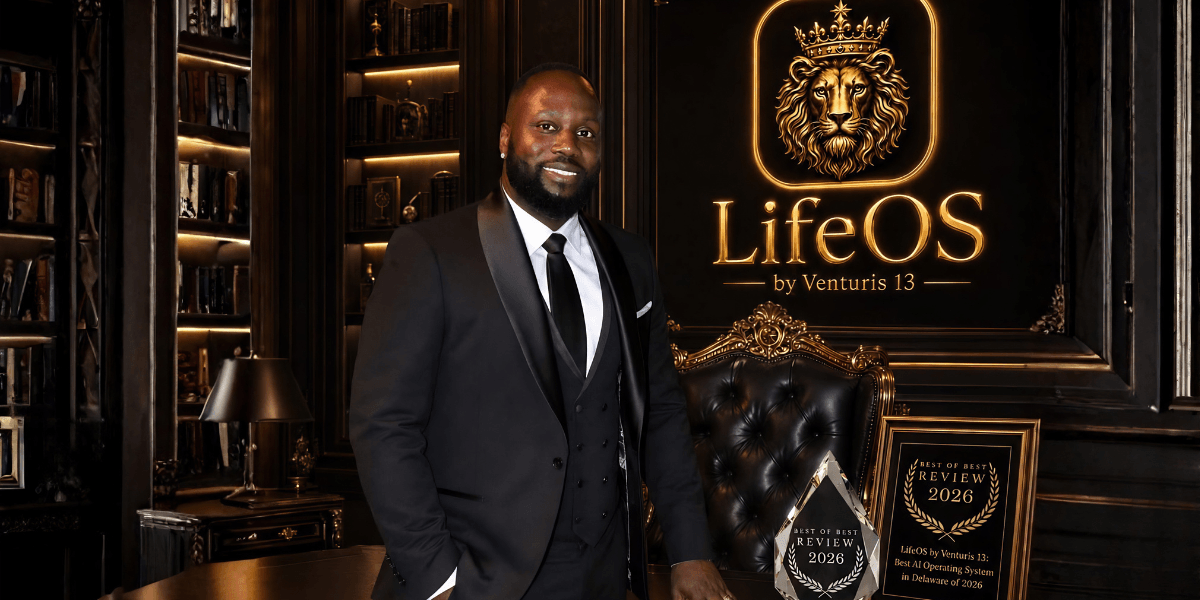
LifeOS™ by Venturis 13 is a live AI operating system unifying intelligence, memory, identity, governance and execution across life and business.
A Live Operating System for a Fragmented Digital World
LifeOS™ by Venturis 13 is live, commercially available and scaling globally. With more than 2,000 users, the platform is built around a central technology thesis: intelligence becomes more useful when it is connected to the systems, people and workflows required to turn decisions into action.
The digital environment has become increasingly fragmented. Individuals move between AI assistants, messaging platforms, meeting tools, document systems, business applications, collaboration software and specialized dashboards. Each tool may perform a useful function, but the overall experience often leaves users responsible for connecting information, decisions and actions across disconnected systems.
LifeOS addresses that fragmentation through a unified operating-system approach for life and business. Rather than functioning only as another chatbot or AI assistant, the platform brings together intelligence, memory, identity, permissions, communication, coordination, governance and execution within a connected environment.
Its broader objective is to support the movement from Information → Decision → Coordinated Execution.
From AI Answers to Coordinated Action
Many AI products are designed primarily to respond to prompts, generate content or provide information. LifeOS approaches the problem from a wider operational perspective.
Information is only the beginning of useful work. People and organizations also need to understand context, make decisions, communicate with others, coordinate responsibilities and execute actions within the appropriate structure.
LifeOS is designed around that complete sequence.
The platform connects AI-driven intelligence with the surrounding systems required to turn decisions into coordinated activity. This includes communications, collaboration, meetings, documents, information management, venture and business management, team tools, community capabilities and other operational functions.
The result is an operating-system thesis rather than a single-feature product thesis. LifeOS is intended to provide a connected environment in which intelligence does not remain isolated from the people, teams, permissions and workflows involved in execution.
A Platform Built Around Distinct Intelligence Layers
The LifeOS architecture includes intelligence and operating layers designed to support different areas of use.
ATHENA represents personal AI intelligence within the LifeOS environment. TARA represents organizational and business intelligence. Together, these elements reflect the platform’s distinction between individual needs and broader organizational requirements.
The architecture also includes IQ1, DO and ID as part of the broader LifeOS framework. These elements should be understood within the LifeOS system rather than as unrelated standalone products. Their inclusion reflects the platform’s wider effort to connect intelligence with identity, coordination and practical execution.
LifeOS also incorporates AI-driven execution and workflow coordination. This focus is important because the platform is not positioned solely around producing answers. Its purpose is to help connect information and decisions with the activities required to move work forward.
The platform’s capabilities include:
- Personal AI intelligence through ATHENA
- Organizational and business intelligence through TARA
- AI-driven execution and workflow coordination
- Unified communications and collaboration
- Meetings and video communication
- Document and information management
- Venture and business management
- Investor Room capabilities
- Team and organizational tools
- Community and social capabilities
- Voice and text AI interaction
- Integrations designed to reduce fragmentation between tools
These components support the central LifeOS proposition: intelligence becomes more valuable when it can operate within an environment where communication, coordination and execution are connected.
Governance as a Core Differentiator
Governance is a major part of the LifeOS positioning.
As AI systems become more capable, the challenge is not only whether a system can generate information or recommend an action. The larger question is whether the action can be coordinated within the correct identity, permissions, context and organizational structure.
LifeOS is designed to support execution while maintaining those considerations.
Identity helps establish who is acting within the environment. Permissions help define what people and systems are authorized to access or do. Context connects activity to the relevant individual, team, organization or objective. Organizational structure helps ensure that coordination does not occur in isolation from the people and responsibilities involved.
This governance focus distinguishes LifeOS from a basic conversational interface. The platform’s operating-system approach recognizes that execution requires more than intelligence alone. It requires the ability to connect AI-driven activity with the right people, information, permissions and operational setting.
LifeOS does not present governance as a separate administrative feature. It is part of the broader infrastructure required for AI to function responsibly within real-world environments.
Reducing the Cost of Digital Fragmentation
The problem LifeOS addresses is not limited to the number of applications people use. Fragmentation also creates a cost in lost context.
A conversation may happen in one platform, a decision may be recorded in another, a document may be stored elsewhere and the resulting action may depend on a separate task or business system. This creates friction for individuals and organizations that must repeatedly transfer information between tools.
LifeOS is designed to reduce that friction through unified communications, collaboration, meetings, video communication, document management, business tools, team capabilities, community functions and integrations.
The objective is not simply to place more features in one interface. It is to create a connected operating environment where information and activity can remain related to the people, organizations and decisions that give them meaning.
That approach supports both personal and business use. Individuals may need a more coherent way to manage information and interaction. Organizations may need a shared environment that connects intelligence, communication and operational responsibilities across teams.
A Broader Operating-System Thesis
The LifeOS model extends beyond the idea of an AI assistant.
An assistant generally responds to a request. An operating system provides an environment in which different activities can be organized and connected. LifeOS applies that broader concept to the relationship between people, businesses, information and AI.
Its thesis is that the next stage of AI adoption will depend not only on more capable models, but also on better operating environments around those models.
Those environments must account for memory, identity, permissions, communication, governance and execution. They must also support the practical activities through which people and organizations operate every day.
AI becomes embedded everywhere, the next infrastructure challenge is coordinating everything around it.
That principle captures the larger LifeOS vision. The platform is positioned as an infrastructure-oriented environment that connects intelligence to the systems through which people communicate, make decisions, manage information and carry out work.
Founder-Led Vision, Broader Team Execution
Donald Lavoile is the Founder & President of Venturis 13 Global Holdings LLC. He provides the founder-led vision, strategic direction and commercialization strategy behind LifeOS by Venturis 13.
His role provides context for the platform’s development and market direction, but LifeOS is not presented as the work of one individual. The platform reflects contributions from a broader technical and operational team.
That distinction is important to the company’s current positioning. LifeOS is not a concept waiting to be developed. It is an existing live platform supported by a wider team and directed toward global scaling.
The company’s emphasis is increasingly focused on the operating environment itself: how LifeOS connects personal and organizational intelligence with the systems needed to support users across different areas of life and business.
Scaling an Existing Platform
LifeOS is scaling from a live commercial platform with a growing user base.
With more than 2,000 users, the platform’s current direction centers on expanding globally while continuing to develop the capabilities of an existing operating environment. That includes strengthening the relationship between personal intelligence, organizational intelligence, communications, collaboration, information management, business operations and execution.
The long-term opportunity is connected to the same problem that shaped the platform’s development. People and organizations need more than isolated AI tools. They need environments that preserve relevant information, connect activity and support coordinated action.
LifeOS is designed to address that need through a unified platform that brings intelligence and execution closer together.
Its global scaling direction reflects a broader infrastructure ambition. As AI becomes part of more personal, professional and organizational workflows, the systems around it must become capable of managing identity, permissions, memory, communication and responsibility.
LifeOS is part of an emerging category of technology. LifeOS is not simply another AI assistant. It is a live operating environment connecting intelligence, memory, identity, governance, and execution across life and business.
About LifeOS by Venturis 13
LifeOS™ by Venturis 13 is a live AI operating system for life and business. The platform brings together personal and organizational intelligence, AI-driven execution, communications, collaboration, meetings, video communication, document and information management, venture and business management, Investor Room capabilities, team and organizational tools, community and social capabilities, voice and text AI interaction, and integrations designed to reduce fragmentation between tools.
Founded by Donald Lavoile, Founder & President of Venturis 13 Global Holdings LLC, LifeOS is commercially available and scaling globally with more than 2,000 users.
Readers interested in LifeOS by Venturis 13 can explore the official website at venturis13lifeos.com or access the platform directly at app.venturis13lifeos.com.
Connect with LifeOS, Donald Lavoile on LinkedIn, Venturis 13 on LinkedIn, Instagram, and YouTube. Business inquiries can be directed to admin@venturis13.com.
Biz Weekly Contributor
Covers business, technology, entrepreneurship, and the changing digital landscape.
This article features partner, contributor, or branded content from a third party. Members of the Biz Weekly editorial staff were not involved in the creation of this content. All views and opinions are those of the contributor alone.