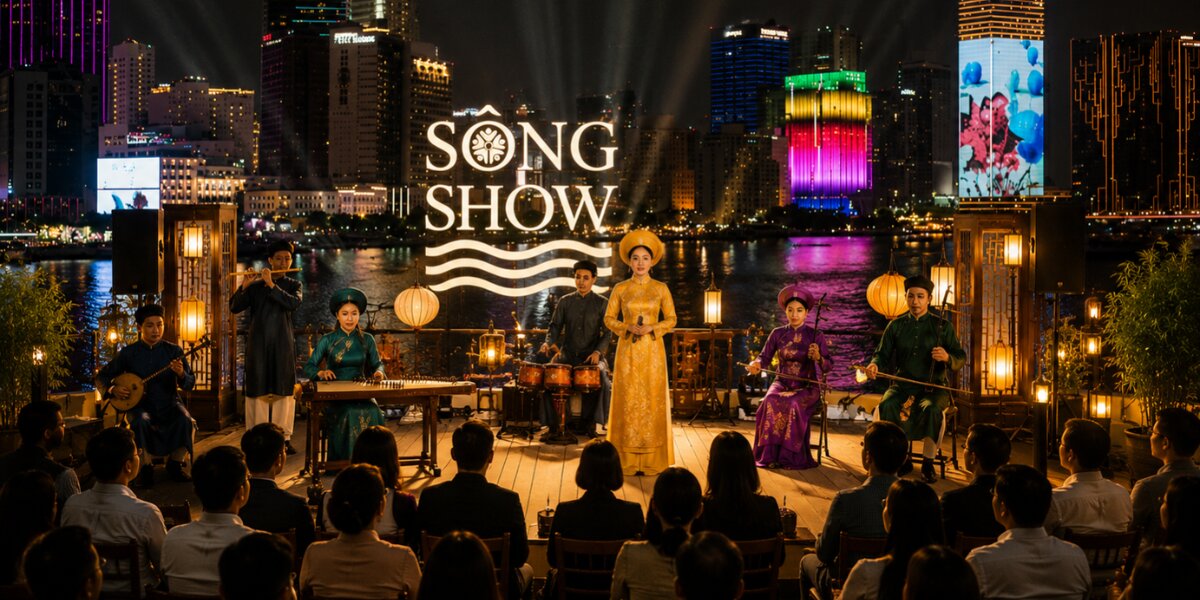
Saigon River cruises are evolving into immersive journeys linking city life, heritage, nature, and history.
For decades, the Saigon River was treated as a backdrop to Ho Chi Minh City’s rapid expansion, an active waterway carrying cargo, commuters, and the remnants of a once-bustling colonial port. Today, however, it is being reimagined not just as infrastructure or scenery, but as a connective cultural corridor linking Vietnam’s urban present with its ecological and historical past.
A new wave of cruise experiences is redefining what it means to travel along this river. Instead of simply offering sightseeing routes, operators are building multi-layered journeys that combine storytelling, ecology, history, and immersive exploration. The river is no longer just something to look at, it is something to travel through meaningfully.
At the center of this transformation is LuxGroup, through its Amiral Cruises brand, which is positioning the Saigon River as part of a broader “Vietnam Waterways” vision that integrates heritage and modern luxury travel.
From Urban Waterway to Cultural Spine
Ho Chi Minh City has always been shaped by the Saigon River, even when its presence felt secondary to roads and skyscrapers. Historically, it was the city’s original gateway to global trade. Ships once entered from the South China Sea, bringing goods, people, and influence that shaped the early identity of Saigon as a major port city.
What is changing now is not the river itself, but how it is perceived.
Rather than serving as a boundary or transit route, the river is increasingly seen as a cultural spine connecting multiple narratives, colonial architecture, wartime history, modern urban development, and fragile ecosystems further downstream.
Cruise operators are beginning to frame journeys around this idea of layered storytelling. Passengers are not just moving along water; they are moving through time, geography, and memory.
A Multi-Destination Experience, Not Just a Cruise
One of the defining features of the new generation of Saigon River experiences is that they extend far beyond the city center.
Rather than limiting routes to skyline viewing or dinner cruises, operators now offer integrated itineraries that combine river travel with inland and ecological excursions.
Through Amiral Cruises, for example, journeys are structured around distinct experiential themes:
- Urban river cruises showcasing the evolving Ho Chi Minh City skyline
- Cultural and historical excursions to sites such as the Củ Chi Tunnels
- Ecological expeditions into the Cần Giờ Mangrove Biosphere Reserve
These are not separate tours but interconnected chapters of a single journey.
The Cần Giờ mangrove region, recognized as a UNESCO biosphere reserve, introduces travelers to one of southern Vietnam’s most important ecological systems. Meanwhile, routes toward the Củ Chi Tunnels connect river travel with Vietnam’s wartime history, offering a stark contrast between natural calm and historical intensity.
Together, they form a travel ecosystem that blends environment, memory, and urban development.
Information on these structured itineraries is part of Amiral’s full-day and themed cruise offerings through its official platform Amiral Cruises, operated under LuxGroup’s broader travel ecosystem LuxGroup.
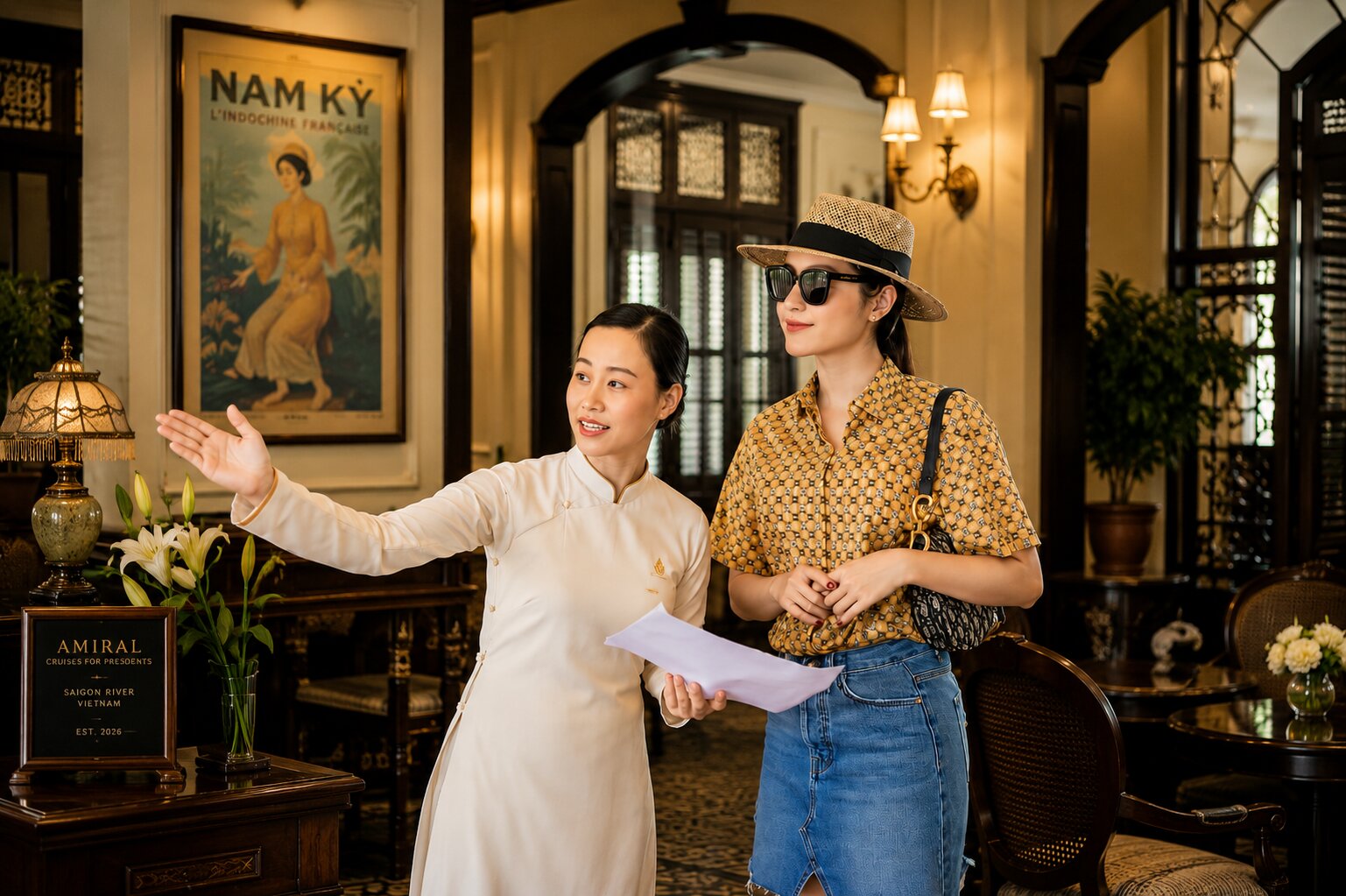
The Shift From Transport to Experience Design
Traditional river tours often focused on transportation and sightseeing efficiency: board the boat, follow a route, return to shore. The new model is fundamentally different.
Cruises along the Saigon River are increasingly designed as “experience environments” rather than transport services. This means every element, from pacing and lighting to food, narration, and onboard layout, is curated to support immersion.
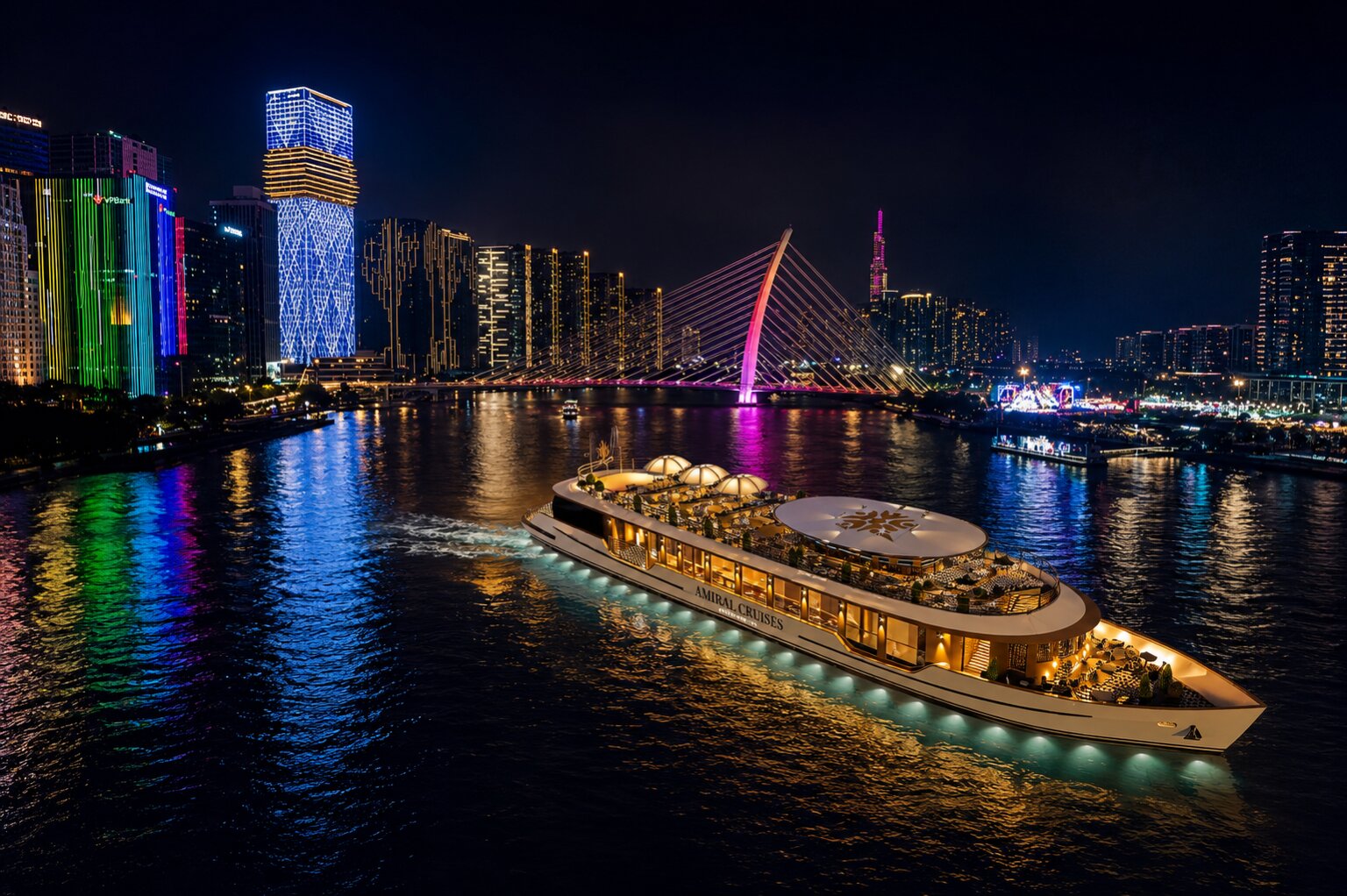
Day-to-dusk journeys, for example, are structured to show the river in transition: bright urban movement during daylight, followed by a gradual shift into reflective night-time ambiance. One such concept is the Day-to-Dusk Night Cruise Experience, which reframes the river as a living, changing narrative space rather than a fixed route Day-to-Dusk Night Cruise Experiences (Amiral Cruises).
Instead of overwhelming passengers with commentary, the experience is designed around observation and atmosphere. The city becomes a visual story unfolding in real time.
Speedboats, Yachts, and Boutique Vessels
The diversification of vessel types is another key shift shaping this emerging cruise ecosystem.
Rather than relying on a single format, operators are introducing multiple layers of river travel:
- Speedboats for fast-access exploration into mangroves and rural waterways
- Urban river yachts for sunset dining and skyline cruising
- Boutique cruise vessels for longer, narrative-driven journeys
These categories allow the river to serve different travel moods, from adventure and exploration to leisure and cultural immersion.
Some experiences even use speedboat routes to reach destinations such as the Củ Chi Tunnels or ecological reserves in a single-day itinerary. One example is the full-day Cần Giờ Mangrove Forest expedition, which combines river travel with guided ecological exploration Can Gio Mangrove Forest Expedition – Full Day Cruises.
Similarly, river journeys to the Củ Chi Tunnels offer a combined water-and-land narrative that connects natural scenery with Vietnam’s wartime legacy Full Day Trip to Cu Chi Tunnels from Bach Dang Pier.
The River as a Storytelling Medium
What distinguishes this new wave of tourism is not simply the destinations, but the way the river itself is being used as a storytelling medium.
Rather than treating stops as isolated attractions, the journey is structured as a continuous narrative. The river becomes a visual and emotional thread linking disparate experiences.
In this model, meaning is not delivered through constant explanation. Instead, it emerges through contrast:
- Silence of mangroves after urban noise
- Reflection of skyscrapers fading into natural waterways
- Transition from historical sites to modern cityscapes
The river becomes both stage and narrator.
A Repositioned Tourism Economy
The broader significance of this shift extends beyond tourism design. It reflects a changing strategy in Vietnam’s positioning of its waterways as long-term cultural assets.
LuxGroup’s vision for Amiral Cruises is part of a larger framework that treats rivers not just as transport corridors but as “living cultural infrastructure.” This includes plans for a multi-vessel ecosystem along southern Vietnam’s waterways, connecting Ho Chi Minh City with coastal and delta regions.
The goal is not mass tourism, but structured, sustainable travel experiences that emphasize cultural depth and environmental awareness.
Conclusion: A Journey That Extends Beyond the River
As more travelers seek experiences that combine meaning, context, and immersion, the Saigon River is emerging as one of Southeast Asia’s most unexpected cultural platforms.
What was once a working waterway is now becoming a layered travel environment, one that connects city skylines with mangrove forests, colonial history with modern ambition, and short excursions with longer narratives.
Through operators like Amiral Cruises and initiatives led by LuxGroup, the river is no longer just something crossed or observed.
It is becoming something interpreted.
And in that reinterpretation, the Saigon River is quietly redefining how Vietnam tells its story to the world.