The Matrix of Resilience: How to Forge the New Paradigm of Italian Manufacturing
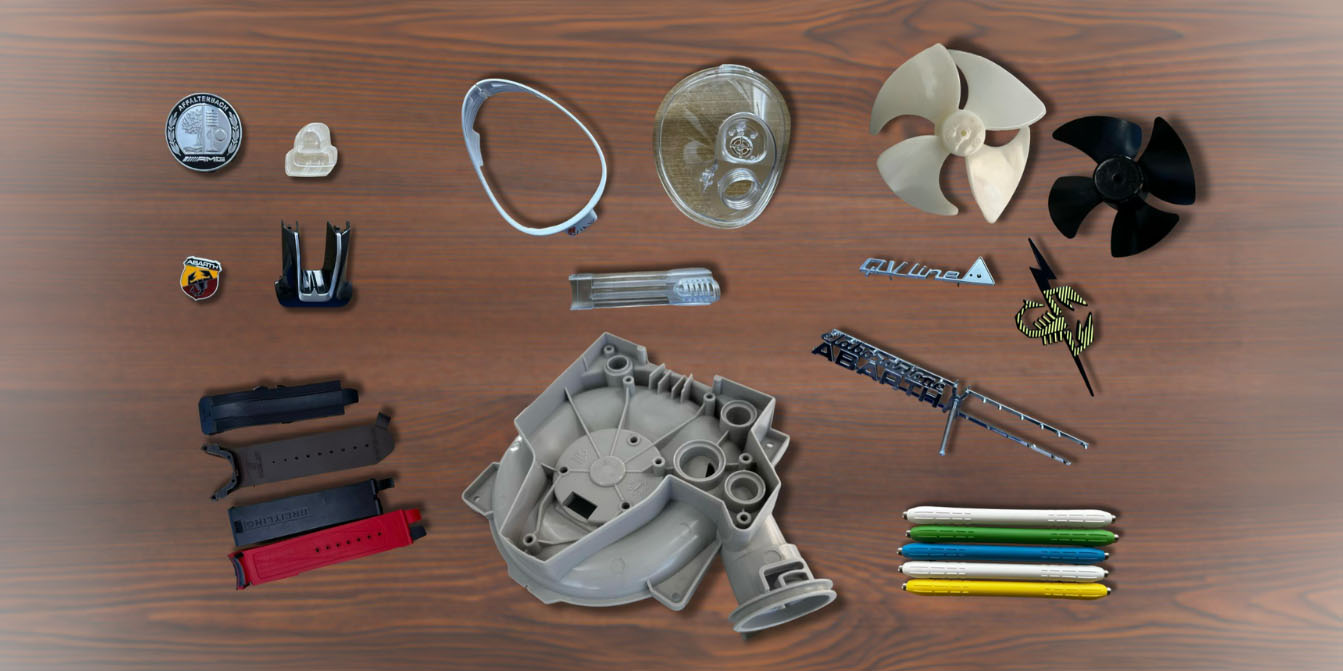
From workshop executors to global tech partners, Valerio Molina recounts the evolution of F.lli Molina s.r.l. amid industrial innovation and competition.
By: Matteo Valléro – Editorialist & Columnist, Italy
Take a block of hardened steel. To transform it into an instrument of extreme precision, capable of shaping matter to the thousandth of a millimeter, immense pressures, highly advanced technologies, and a design that allows no margin for error are required. It is a perfect metaphor to describe the current condition of the Italian manufacturing enterprise: forced to withstand the enormous pressures of an often complex economic ecosystem, in order to successfully produce excellence.
A recent episode of the podcast Challenge, recently available exclusively on the Italian platform of Amazon Music, explored exactly this dynamic, bringing to light the silent challenges of a sector that represents the true industrial backbone of the country.
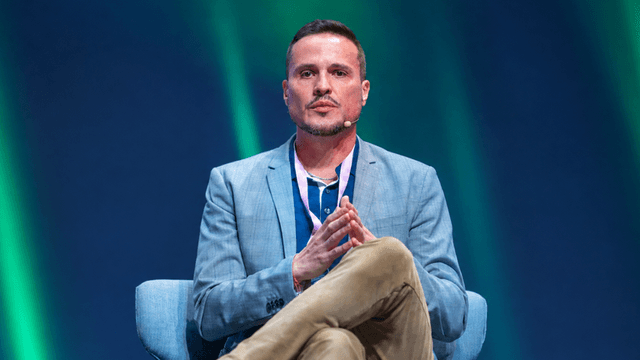
The protagonist of the episode is Valerio Molina, a key figure at F.lli Molina s.r.l., a Lombard company that since the 1960s has been able to evolve from a traditional mechanical workshop to a true clinic of high precision.
Listening to his testimony, a picture emerges in which technical competence, however high, is no longer sufficient to guarantee survival and growth. Today’s entrepreneur must be simultaneously a technological innovator, a market strategist, and a visionary.
The first great metamorphosis takes place exactly upstream of production: the modern workshop has ceased to be a place of pure chip removal to transform into a computational calculation laboratory, where steel is virtualized even before being cut.
Mr. Molina, the construction of a highly complex mold today is decided almost entirely in the digital simulation and “digital twin” phase, well before the milling machine touches the raw material.
How do you manage this transition towards predictive engineering, and how is virtualization redefining the very concept of margin of error in your sector?
“Thanks to the technological software we have available today, we have a sort of protection, because we are able to do a series of tests before going to produce the chip, before bringing the piece of steel into the machine. This serves to perform checks that guarantee, I won’t say one hundred percent, because there is never certainty that the piece is ‘good the first time’.
And it is important that it is so to keep costs under control and, in terms of image, for the client, who is pleased that the service works and is timely.
There are many software programs: software that simulates the flow of plastic in the material, software that simulates tool paths. All these software programs put together ensure that the margin of error is extremely low.”
Once the internal structure is consolidated, the battlefield inevitably shifts to international markets. Exporting is now a categorical imperative, but the very concept of “Made in Italy” is undergoing a radical transformation.
For decades, the tricolor label was enough to justify a premium positioning. Today, with Asian manufacturing having closed much of the qualitative gap on standardized products, the price war proves to be a suicidal strategy. The only way out for precision mechanics is to abandon the mid-range to take refuge in extreme complexity.
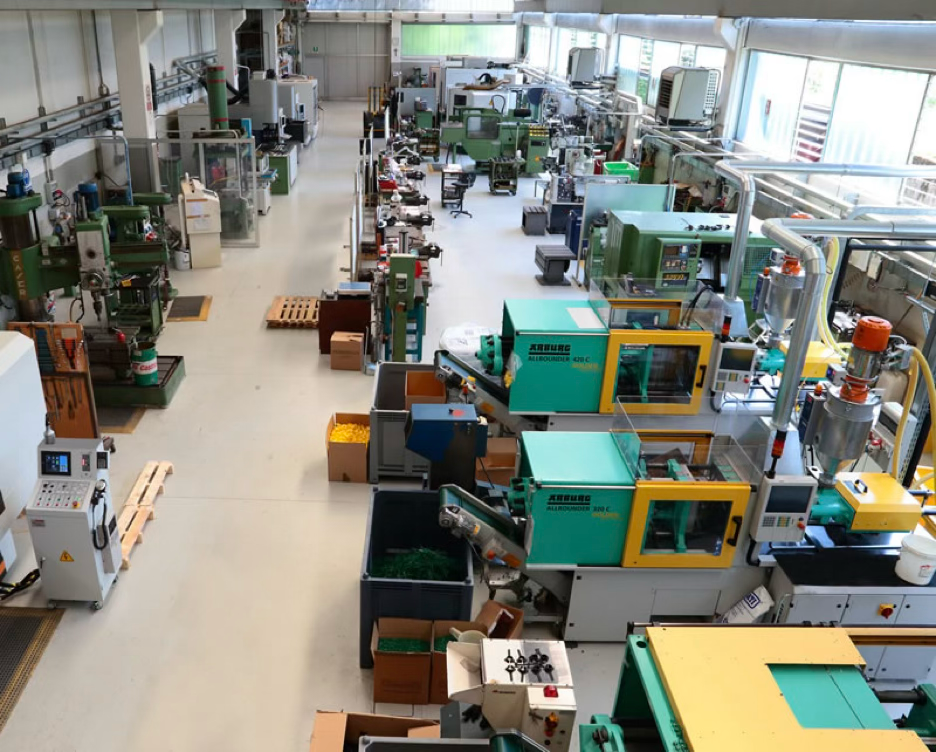
To compete abroad against low-cost giants, simply applying the “Made in Italy” label is no longer enough. You have radically evolved your business model, moving towards co-design and sectors with extremely high technical requirements. What role does the transition from “simple supplier” to “strategic partner” play in maintaining market shares on a global level?
“I would say one hundred percent. I would also add an all-around service perspective towards clients, which in my context means the introduction of injection molding.
At the beginning, it was introduced in the company to do tests: the moment we finished a mold, we went straight to the press to test it. With the finished product in hand, we immediately went to understand if there was anything to modify.
Instead of taking the mold, sending it to the client, having them do the dimensional check, or having them send it to one of their suppliers for molding before it comes back to us, today we manage to save three to four weeks. This saved time translates into saved costs.
From an international point of view, it makes no sense to clash with countries like China: they are too big and have too much power. It is absolutely necessary to focus on niche services and markets, which have high margins and where clients are willing to pay a premium to receive a reliable and qualified service.”
This upward repositioning, and the entry into critical markets such as aerospace or medical, not only redefines commercial boundaries, but the very anatomy of the manufactured object.
The contemporary mold has ceased to be a passive block of metal; it is becoming an intelligent device, integrated within interconnected production lines. This evolution shifts the axis of the skills required within the manufacturing company, forcing it to merge pure mechanics with materials science, electronics, and real-time data analysis.
Diversification into advanced sectors requires you to create “intelligent” molds, capable of communicating with presses through IoT sensors to monitor wear and thermal flows. What unprecedented skills, halfway between metallurgy and software engineering, must an SME develop today to govern this technological convergence without losing its artisanal identity?
“The starting point is experience. From this point of view we have a strong foundation: having opened the company in the 60s, all the knowledge we have created over the years is also applicable within these new markets or new approaches.
Artificial intelligence is a very efficient and effective way to synthesize everything. Instead of having more staff studying and analyzing, artificial intelligence is a valid synthesis tool, which then must obviously be reinterpreted because it is not one hundred percent truthful.
However, it certainly lends a hand in the development of these new skills required in much more technological markets. By putting together artificial intelligence, experience, and the CAD/CAM software we have, we square the circle.”
Surviving and thriving in an uncertain macroeconomic context therefore requires a very rare combination of analytical clarity and stubbornness.
Leading a company in Italy increasingly resembles an obstacle course, where the rules of the game change on the run. The role of the entrepreneur is not limited to administration, but requires acting as a true engine of change, willing to question their own certainties in order to find a way out and grow.
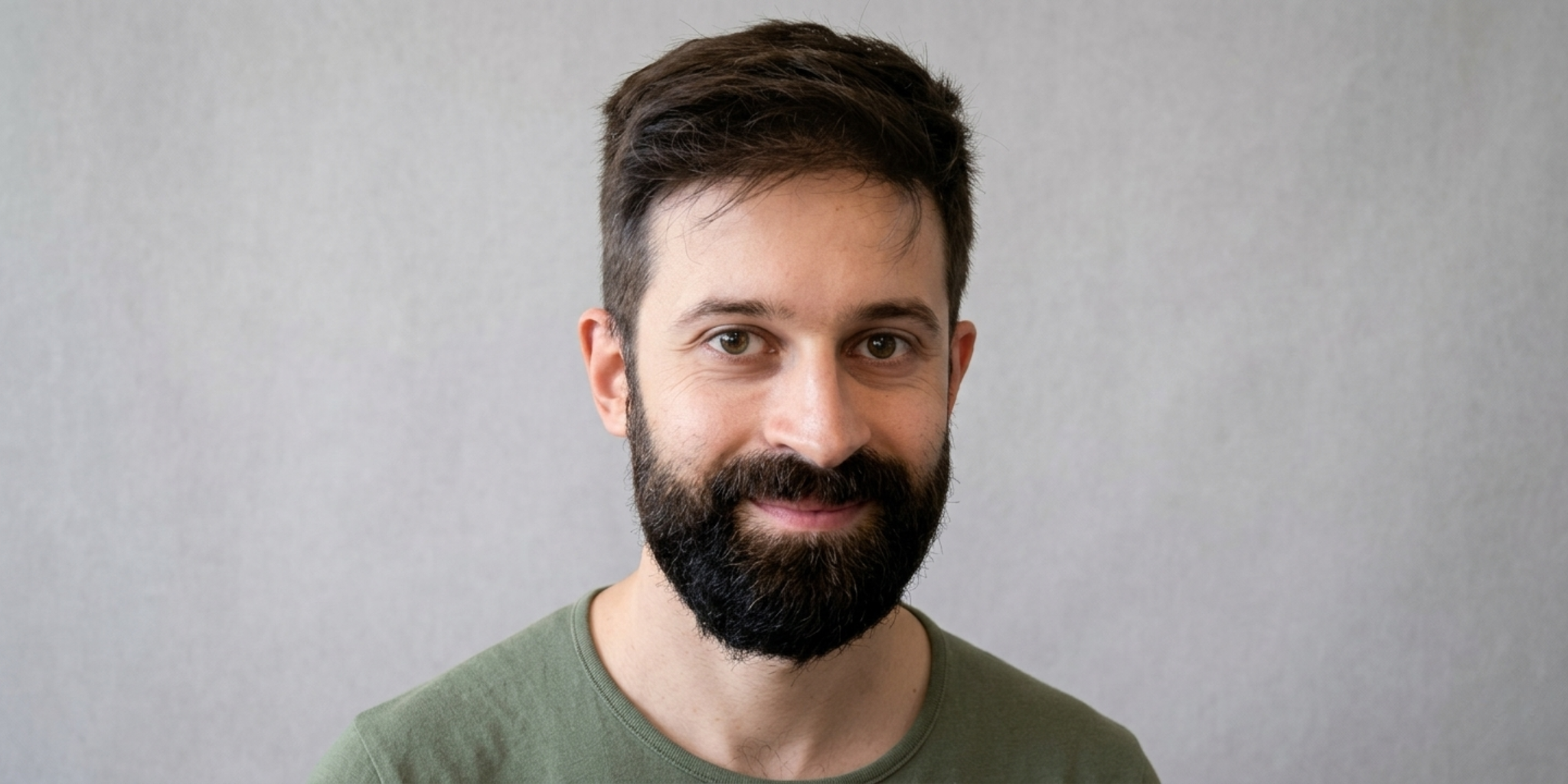
In an ecosystem that often seems designed to discourage private initiative, what is the fundamental mental attitude, the “mindset” that a leader must maintain in order not to give up and to continue pushing both themselves and their company towards new goals?
“I can answer starting from a personal point of view, regardless of my role.
You must always be very calm. In recent years, particularly since 2020 with the outbreak of Covid, I realized that calmness is essential.
You shouldn’t make hasty decisions, even if we live in a world that demands it. You cannot procrastinate endlessly, but taking the time to understand where you are, being aware of what you are doing and where you are going, is essential.
The second thing is to be sure of yourself. The skills that are created and learned in daily work serve to move forward and find motivation.
Being sure of yourself, together with calmness and passion for the work you do, are the three cornerstones to keep moving forward.”
In the end, the mechanical industry of excellence teaches us a lesson that goes beyond the walls of the workshops: it is not the starting material that determines the value of the final product, but the precision of the intuition and the strength with which one is willing to shape it.
And as long as there are companies capable of reengineering not only metals, but their very way of existing, the economically vital fabric of the country will continue to find its shape in the world.
Biz Weekly Contributor
Covers business, technology, entrepreneurship, and the changing digital landscape.
This article features partner, contributor, or branded content from a third party. Members of the Biz Weekly editorial staff were not involved in the creation of this content. All views and opinions are those of the contributor alone.