Political Risk Is a Bad Excuse: Paul Scribner
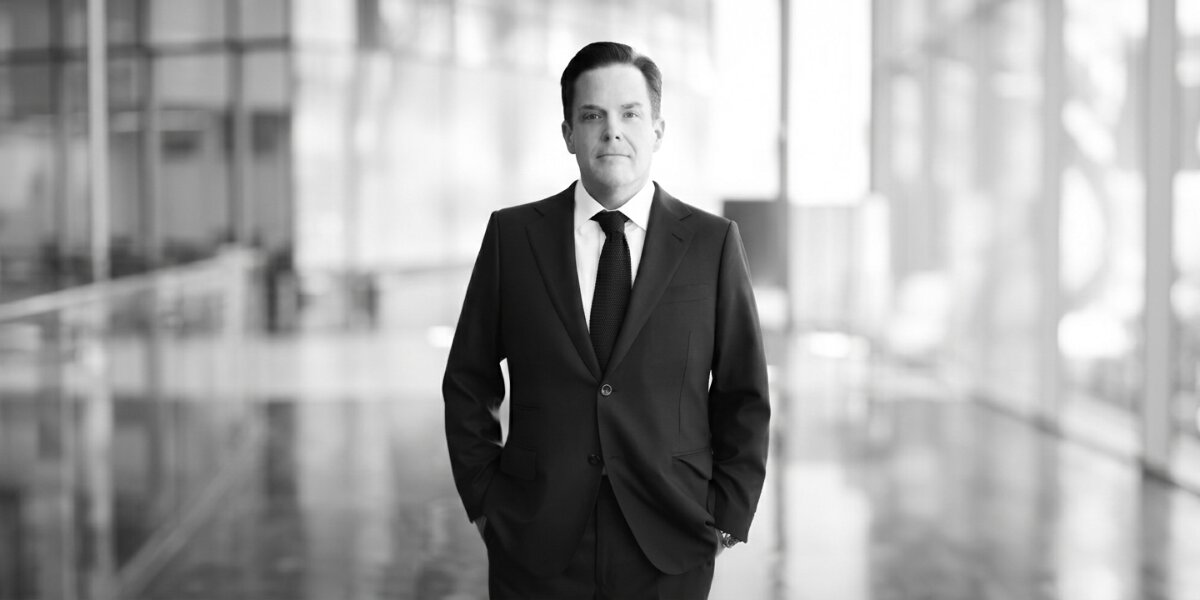
Paul Scribner of General Holdings on why political risk is a bad excuse and workforce-first investing reaches assets global capital keeps failing to buy.
There is a category of industrial asset across several emerging markets that global capital keeps trying to buy and keeps failing to close. Refineries, ports, steel plants and petrochemical facilities. Built by the state, idled by circumstance, and now carried at close to nothing. Investors have circled these assets for years. Most walk away citing political risk. Paul Scribner, founder and Chief Executive of General Holdings Limited, thinks that explanation is a way of avoiding a harder question.
The Assets Everyone Has Written Off
The story begins with what these assets actually are. Heavy plant that a government once financed, staffed and operated, then shuttered when conditions turned. The facilities remain. The workforce remains. What disappears is the market’s willingness to price them at anything above scrap.
That is precisely why they interest Scribner. Idled industrial infrastructure is illiquid, operationally demanding and unglamorous. It cannot be flipped, and it does not photograph well. Those same qualities are what keep it cheap. General Holdings, incorporated in the Dubai International Financial Centre in November 2024, was built to hold assets of exactly this kind.
“Political risk is the explanation people reach for when they do not want to examine their own approach,” Scribner says. It is a pointed remark, and he means it to be. His argument is that the failures are not primarily political. They are structural, and they begin with who the investor chooses to talk to first.
Why These Transactions Keep Collapsing
Follow a decade of failed deals across this asset class and a pattern emerges. Western capital arrives and treats organised labour as something to be managed around. It negotiates with ministries. It structures the transaction. Only then does it discover that the workforce holds an effective veto, and that nobody has given that workforce a reason to use it favourably.
By that point the damage is done. The investor has spent its energy on the state and none on the people who actually run the plant. What follows is two years of trying to buy past a constituency it has already alienated.
“The workforce at a state-built asset holds a veto whether or not your term sheet acknowledges it,” Scribner says. “You can find that out at the beginning or you can find it out two years in.” The distinction is not rhetorical. It is the difference between a deal that closes and one that dies quietly in a data room.
Starting Where Others Stop
General Holdings reversed the sequence. The firm began with the workforce. Its position rests on a formal cooperation agreement executed with the representatives of the people who operate these facilities, signed before any approach to the state.
That ordering is the entire argument. It slows everything at the front. It is uncomfortable, and it requires patience that most competitors cannot afford. Yet it means that when General Holdings finally reaches the table with the state, it arrives with the workforce beside it rather than waiting to be consulted.
Scribner treats organised labour as a counterparty, not an obstacle. This is the difference that decides outcomes. The firms he competes against are usually larger and almost always faster. In this arena, speed is not an advantage. Presence is.
A Principal, Not a Manager
The approach only works because of how the firm is built. General Holdings is not a fund. It does not manage third-party capital. It invests its own balance sheet as a principal and brings institutional co-investors alongside.
That structure matters more than it might sound. A fund answers to a clock. It must exit on a timetable set by its investors, whatever the asset needs. Assets of this kind need five to ten years and an owner who is present throughout.
“We are not a fund,” Scribner says. “Nobody is waiting on us to exit, which means we can afford to be patient in places where patience is the only thing that works.” The incentive is the asset itself, not a management fee on committed capital.
The DIFC gives the firm a common-law framework, regional proximity and access to Gulf capital that understands long-dated industrial ownership. That is why the platform sits in Dubai rather than London or New York.
What Capital Owes
There is a second thread to Scribner that is unusual in his industry. He writes. For more than a decade he has published essays on arts, culture, , obligation and what capital owes the places where it operates, latterly through GH Insights and at his personal site.
The idea he returns to is patronage: the notion that ownership carries duties that survive the transaction itself. It sounds like sentiment. Scribner insists it is not. “Ownership carries obligations that outlive the transaction,” he says. “That is not sentiment. In these markets it is the operating condition.”
This is where the two halves of the argument meet. Most people in the sector either hold a philosophical view of that sort or they do the workforce-first deal. Scribner does both, and he considers them the same argument expressed in different registers. Enter through the people who run the asset, honour the obligations that ownership creates, and the transaction that global capital could not close becomes reachable.
General Holdings is twenty-one months old. Scribner does not pretend it has a legacy to trade on, and he declines to invent one. What he offers instead is a thesis being tested in real time against assets that most international investors have abandoned. His work and the firm’s have drawn coverage from Khaleej Times, Fast Company Middle East, The Arabian Post and Arabian Business, and Scribner featured in the MSN Top 10 Leading Men to Watch in 2026. He waves most of that away.
“I would rather be judged on whether this closes than on how it reads.”
That is a fair test, and an honest one. Whether or not you accept his thesis, it deserves examination. The category he describes is real, the pattern of failure is documented, and his alternative is specific rather than aspirational. Read his reasoning, weigh it against the received wisdom about political risk, and decide for yourself whether the industry has been misdiagnosing its own failures all along.
Connect with General Holdings at gh.ae, read institutional commentary at GH Insights, explore Paul Scribner’s essays at paulscribner.com, and follow him on LinkedIn.
Biz Weekly Contributor
Covers business, leadership, and entrepreneurship, highlighting emerging companies and the people behind them.
This article features partner, contributor, or branded content from a third party. Members of the Biz Weekly editorial staff were not involved in the creation of this content. All views and opinions are those of the contributor alone.