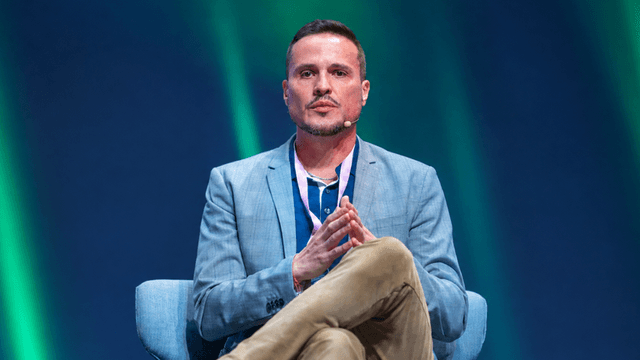
Larry Ellison Briefly Surpasses Elon Musk as Oracle’s AI Cloud Forecast Triggers Record-Breaking Wealth Surge
In a stunning turn of events that highlights the shifting dynamics of the global tech industry, Oracle co-founder and executive chairman Larry Ellison briefly became the world’s richest person on September 10, 2025. This milestone followed a historic surge in Oracle’s stock price, fueled by the company’s unexpectedly bullish forecast for its artificial intelligence-driven cloud business. While the title of richest person eventually reverted back to Tesla and SpaceX CEO Elon Musk by the end of the trading session, Ellison’s momentary rise to the top underscored the growing financial clout of enterprise cloud infrastructure in the age of artificial intelligence.
The catalyst for Ellison’s wealth leap was Oracle’s announcement of a massive uptick in its cloud bookings and projected revenue, driven by surging demand for computing power to support AI applications. Oracle revealed that its remaining performance obligations—a key indicator of future revenue—had ballooned to approximately $455 billion, a staggering 359 percent increase compared to the prior period. This eye-popping figure reflected the company’s recent success in securing multi-billion-dollar cloud contracts with a range of major clients, including OpenAI, Nvidia, and several multinational corporations looking to scale their AI capabilities.
Read Also: https://bizweekly.com/u-s-summer-forecast-predicts-hotter-weather-in-2025/
The market responded with fervent enthusiasm. Oracle’s stock price soared by nearly 40 percent during trading on September 10, instantly adding about $100 billion to Ellison’s net worth. Because he owns roughly 41 percent of Oracle, the stock surge translated directly into personal gains, bringing his total wealth to an estimated $393 billion at its peak—briefly surpassing Musk’s net worth. The increase marked one of the largest single-day wealth gains ever recorded, making headlines around the globe and igniting fresh discussion about the influence of artificial intelligence on financial markets and corporate valuations.
Although Musk reclaimed the top spot by the closing bell, Ellison’s moment at the summit was more than symbolic. It demonstrated how quickly fortunes can shift in a tech economy increasingly shaped by AI innovation and the infrastructure that powers it. Oracle’s AI cloud unit, once seen as a slower-moving rival to giants like Amazon Web Services and Microsoft Azure, has now emerged as a serious contender in the race to dominate the AI infrastructure market. The company has aggressively expanded its data center capacity, invested in partnerships with leading AI developers, and launched ambitious initiatives like Project Stargate, designed to support the next generation of machine learning workloads.
Industry analysts note that Oracle’s aggressive pivot to AI-based cloud services reflects a broader shift across the tech landscape, where value is increasingly concentrated in firms that can provide the computing horsepower required to train and deploy advanced AI models. With generative AI models growing more complex and energy-intensive, the demand for robust, scalable cloud platforms has exploded—and investors are eager to back companies that can meet that need.
However, the road ahead is not without challenges. While Oracle’s forecast has impressed Wall Street, the company must now deliver on its promises. Scaling up cloud infrastructure at the pace suggested in its projections will require enormous capital investment, supply chain precision, and operational execution. There are also potential bottlenecks in acquiring the specialized chips and hardware needed for high-performance computing, including GPUs from suppliers like Nvidia. Furthermore, the rapid growth in cloud commitments may put pressure on Oracle’s ability to maintain service quality, energy efficiency, and profitability.
Despite these concerns, the company’s position in the AI ecosystem appears stronger than ever. Its cloud services have become a foundational layer for AI training and inference workloads, particularly as major clients seek alternatives to dominant players in the market. Oracle’s ability to offer integrated software solutions alongside custom AI compute infrastructure gives it a strategic edge that investors now appear to be pricing into its valuation.
Ellison’s brief reign atop the global wealth rankings also signals a broader shift in how financial markets perceive long-term value. No longer confined to consumer-facing tech products or social media platforms, the most valuable assets in today’s digital economy may now lie in the infrastructure that powers artificial intelligence. It’s a shift that reflects not only changing technological priorities but also a reconfiguration of wealth and influence in Silicon Valley and beyond.
As the AI arms race accelerates, industry watchers will be keeping a close eye on whether Oracle can maintain its momentum and whether Ellison’s next surge to the top might be more permanent. For now, the episode stands as a testament to how artificial intelligence—and the cloud infrastructure that underpins it—can rewrite both corporate trajectories and individual fortunes at unprecedented speed.
Biz Weekly Contributor
Covers finance, markets, and executive leadership, turning balance-sheet detail into plain business sense.
This article features partner, contributor, or branded content from a third party. Members of the Biz Weekly editorial staff were not involved in the creation of this content. All views and opinions are those of the contributor alone.