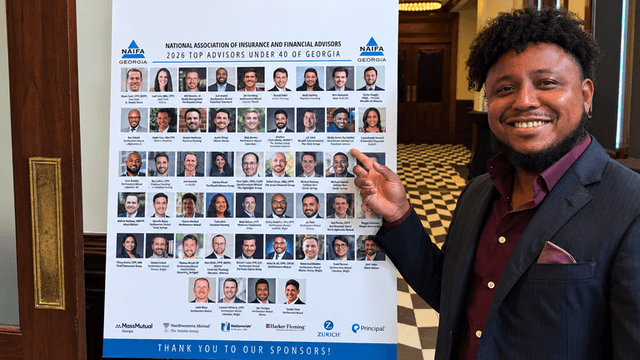
Justin Deveaux Is Rethinking the Rules of Online Dating

Justin Deveaux created Opposites Dating to challenge swipe fatigue and encourage people to discover connections beyond their usual type.
There is a moment in online dating when having more choices can begin to feel like having none. One profile becomes another, another becomes another, and the search continues without necessarily bringing people closer to a meaningful conversation. For Boston-area entrepreneur Justin Deveaux, that familiar cycle raised a different question: What if dating worked differently when people stopped looking for more of the same?
That question became the foundation for Opposites Dating, the app Deveaux created around a deliberately different idea. Rather than encouraging users to browse through an endless collection of profiles, the platform offers one match per day and introduces a daily question designed to create a point of contrast between people. The concept challenges the assumption that compatibility must begin with similarity and instead gives difference a place in the discovery process.
Justin Deveaux Starts With a Different Question
The idea behind Opposites Dating grew from two patterns Deveaux identified in modern online dating. People can repeatedly choose the same type of person, even when that approach has not produced the relationships they hoped for. At the same time, an abundance of profiles can encourage continuous comparison, creating what has become known as swiping fatigue.
Deveaux's response was not to create another version of the same experience. As the founder and creator of Opposites Dating, he developed a concept designed to interrupt both patterns. Instead of asking users to keep searching through an endless stream of profiles that fit familiar preferences, the app creates an opportunity to encounter someone outside their established pattern.
The idea is captured in the brand's message: "Stop dating your clone."
It is a simple phrase, but it represents the central premise of the product. If people continually search for someone who resembles an established idea of their ideal partner, they may overlook people who could offer a different perspective or an unexpected connection.
Opposites Dating Makes Difference Part of the Experience
At the heart of the platform is a daily A-or-B question. Users answer the question, adding a point of contrast to the matching experience and giving each introduction a natural conversation starter.
That contrast is intentional.
Two people who answer differently already have something to discuss. They can ask why the other person chose a particular answer, compare their perspectives, or discover how their preferences developed. Instead of beginning with an assumption that two people must agree, the experience creates a natural opening for curiosity.
Opposites Dating does not suggest that successful relationships require people to disagree about everything. The underlying idea is more nuanced. Similarity can create common ground, but differences can also complement one another. A different interest can introduce a new experience. A different opinion can create a conversation. A different personality can reveal a perspective that might otherwise remain outside someone's usual dating choices.
For Deveaux, that possibility is worth exploring.
Rethinking the Endless Search
The traditional swipe model gives users a large number of profiles to evaluate. That abundance can make it easy to keep searching, even after finding someone interesting. The possibility of another profile can always remain in the background.
Opposites Dating takes a more focused approach. Its experience centers on a daily question and one match per day rather than endless browsing through hundreds of profiles.
That decision reflects one of Deveaux's central observations about online dating: more options do not automatically create better connections. Sometimes, limiting the number of choices can give people more reason to pay attention to the person already in front of them.
By focusing the experience around a daily interaction, Opposites Dating gives users an opportunity to approach a match with curiosity rather than continuing through an endless search.
From a Dating Problem to a Founder-Led Product
Deveaux has taken a hands-on role in creating Opposites Dating. His background in marketing and entrepreneurship has informed the product's development, branding, launch, and growth, allowing the concept and its identity to develop together.
That founder involvement is particularly relevant to a product built around a specific point of view. Opposites Dating is not simply positioned as another place to meet people. Its identity comes from questioning a familiar behavior and presenting an alternative.
During its first 30 days, Opposites Dating reached more than 1 million people through social media. That early reach introduced the concept to people who were already familiar with online dating and invited them to consider whether the conventional search process was actually working for them.
For an independent entrepreneur, the challenge is not simply creating an app. It is communicating an idea clearly enough that people understand why a different approach might be worth trying.
Why an Unexpected Match Can Start a Conversation
One of the defining elements of Deveaux's concept is its emphasis on conversation.
When two people answer a question differently, the difference itself can become an opening. What made one person choose one answer while the other chose another? Would either person change their response after hearing the other's perspective? What other differences might they discover?
These questions can make an introduction feel less dependent on a perfectly constructed profile.
The approach also changes the role of curiosity. Instead of evaluating someone solely against a predetermined list of preferences, users have an opportunity to discover what happens when two different perspectives meet.
That does not guarantee a relationship, and Opposites Dating does not need to make that promise. Its purpose is more straightforward: create opportunities for people to consider connections they might otherwise have dismissed.
Building a Brand Around Discovery
For Justin Deveaux, the development of Opposites Dating represents more than a change in matching mechanics. It reflects an attempt to give people a different way to think about compatibility.
The familiar question in dating is often, "Who is right for me?" Opposites Dating introduces another possibility: "Who might I discover if I stopped searching only for what feels familiar?"
That shift gives the brand its identity. The product is built around difference, but its broader message is about curiosity. It encourages users to look beyond the assumptions they bring into dating and consider whether an unexpected connection can become an interesting one.
One question creates a point of difference. One match creates an opportunity to talk. From there, two people decide where the conversation goes.
Justin Deveaux's Different Approach To Online Dating
As founder and creator of Opposites Dating, Justin Deveaux is building around a simple premise: finding someone compatible does not necessarily mean finding someone identical.
His approach challenges two familiar parts of online dating, the tendency to repeatedly pursue a familiar type and the impulse to keep searching through an endless supply of profiles. In their place, Opposites Dating offers a more focused starting point built around a daily question, an opposing answer, and the possibility of discovering someone unexpected.
For people interested in exploring that idea for themselves, Opposites Dating is available through the Apple App Store and Google Play. Readers can also learn more about the concept through the Opposites Dating website and follow the brand's latest updates on Instagram.
Biz Weekly Contributor
Covers business, leadership, and entrepreneurship, highlighting emerging companies and the people behind them.
This article features partner, contributor, or branded content from a third party. Members of the Biz Weekly editorial staff were not involved in the creation of this content. All views and opinions are those of the contributor alone.