Cyber Chief And The Security Gap SaaS Forgot
Cyber Chief helps scaling SaaS companies prove enterprise-grade security readiness with continuous testing, developer guidance, and trust-building evidence.
The moment often arrives without warning. A company is shipping fast, customers are growing, investors are watching, and the engineering team knows security isn’t under control but is under too much pressure to ship new features to devote any headspace to its “security posture.”.
Then an enterprise customer runs an unsolicited review, a regulator asks for evidence, or a major prospect sends a questionnaire that exposes a gap nobody expected. For many scaling SaaS companies, that is when Cyber Chief becomes more than a platform. It becomes the difference between explaining weaknesses and proving readiness.
Cyber Chief Was Built For The Moment SaaS Gets Tested
Cyber Chief, built by Audacix and led in part by Co-founder and Director Ayush Trivedi, was created for a specific kind of company: the ambitious B2B SaaS business that has outgrown basic security habits but has not yet built a full internal security organization. These companies are often in the Series A or Series B stage, with 50 to 200 employees, enterprise customers in sight, and pressure rising from every direction. They need to pass audits, satisfy procurement teams, support compliance work, and keep developers focused on product growth.
The old security model rarely fits that reality. A manual penetration test once or twice a year can be useful, but it begins aging the moment new code ships. An automated scanner can move faster, yet many tools still throw generic payloads at an application without understanding how the product actually works. Both approaches can leave dangerous gaps. Privilege escalation, workflow abuse, and customer data exposure can hide inside business logic, not just inside obvious attack surfaces.
Cyber Chief was designed to close that gap through a comprehensive CNAPP, or Cloud-Native Application Protection Platform, built for modern software teams. It brings together application security testing, API security through Bolt, cloud security posture management through Raider CSPM, container security, software bill of materials analysis, infrastructure-as-code scanning, and Scout, an LLM-powered agentic penetration testing capability built on Audacix’s in-house model, Scout AI.
Still, the larger story is not simply about more tools. It is about a new operating model. Cyber Chief calls it the Modern AppSec Paradigm, a five-part framework built around Integration, Autonomy, Support, Depth, and Champions. In practice, that means security fits into CI/CD pipelines, runs continuously without manual triggers, gives developers real-time expert guidance, layers enhanced manual tests over automated coverage, and helps companies build internal ownership instead of vendor dependency.
Cyber Chief Turns Findings Into Developer Action
The need becomes clearest in customer stories. One ecommerce SaaS company, funded at $34 million with more than 500 developers and over 20,000 customers, faced a sudden problem when its largest integration partner ran an unsolicited security review. The review created pressure that could have threatened a critical commercial relationship. The company was not careless. It had working code, modern workflows, and an experienced team. It simply faced the standard gap that confronts many growth-stage SaaS companies: product velocity had outrun traditional security structures.
Wahed, a FinTech company managing $370 million in assets across 130 countries, faced a different version of the same problem. Its team relied on annual penetration test reports that were slow to arrive and difficult for developers to act on. As regulatory needs grew across markets, security work began slowing product work. Developers were spending more time interpreting security findings and less time shipping features.
That is where Cyber Chief’s model changes the rhythm. Instead of waiting months for a static report, teams can run automated nightly security tests that cover work previously limited to occasional human reviews. Instead of forcing engineers into new security processes, Cyber Chief integrates findings into the workflows they already use, including GitHub, Jira, and Slack. The result is not just visibility. It is action.
Wahed’s CTO, Arif Shanji, said the on-demand coaching and reporting “exceeded our expectations.” That detail matters because the praise was not centered on volume. More findings alone rarely help a busy development team. The real benefit was that Wahed’s own people could understand the issues, fix them, and move forward without waiting on an external consultant to explain a report.
CleverTap’s Director of Software Engineering, Todor Petrov, pointed to another important shift: replacing vague, hard-to-replicate findings with developer-ready scans integrated directly into GitHub and Jira, supported by real-time guidance in Slack. That is the difference between a report that sits in a folder and a system that changes daily engineering behavior.
Cyber Chief’s position is built on a direct claim about value. Most security vendors sell scanners or reports. Cyber Chief builds the connective layer between them, then stays engaged. Its continuous, CI/CD-native testing is designed to understand an application’s actual business logic, so it can identify risks that generic automated scans and once-a-year reviews can miss. At the same time, its coaching and remediation guidance help developers fix vulnerabilities in hours rather than wait weeks for outside review.
Cyber Chief Makes Security A Sales Asset
For SaaS companies selling into regulated or security-conscious markets, security is not only a technical discipline. It is a revenue conversation. FinTech, MarTech, and ecommerce companies often face tough procurement reviews before enterprise buyers sign. A weak answer can slow a deal. A clear answer, backed by evidence, can build trust.
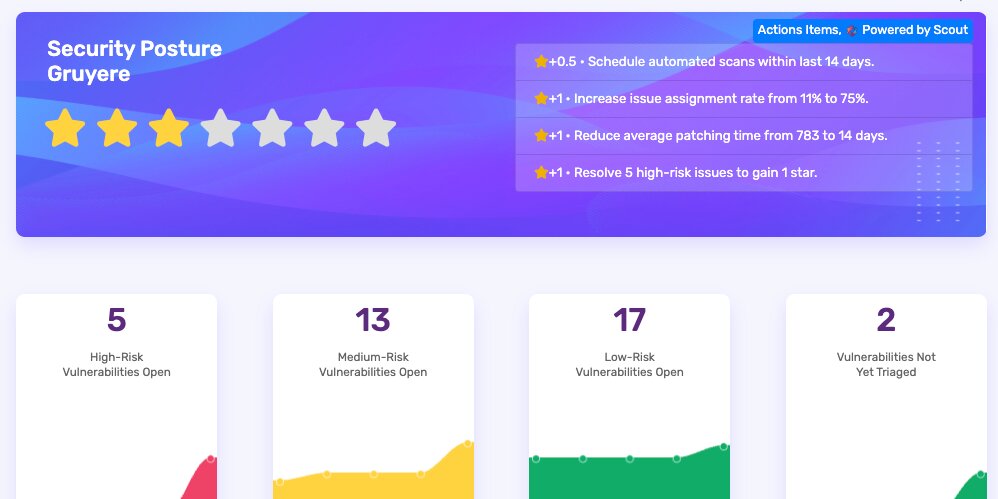
That is why Cyber Chief focuses on control as much as coverage. The platform aims to help clients answer a question that can make engineering leaders uneasy: Are we secure? More importantly, it helps them answer with evidence instead of instinct. Security posture becomes visible, measurable, and easier to explain to customers, partners, investors, and internal leadership.
The reported customer outcomes reflect that shift. A FinTech client reclaimed more than 250 hours of developer time and nearly $560,000 in security-hire costs. A MarTech company replaced vague, unreplicable findings with a live trust portal that helped turn security from a sales objection into a closing argument. An ecommerce platform moved from hoping its biggest customer would not audit it to providing security posture on demand.
Those examples point to the broader market need. Scaling SaaS companies are not trying to avoid security. In many cases, they are trying to build it while also hiring, shipping, selling, supporting customers, and entering more demanding markets. They cannot afford a security strategy that depends on sporadic consultant cycles or unread PDF reports. They need a system that keeps pace with code and teaches their own teams to own the outcome.
Cyber Chief’s Modern AppSec Paradigm gives that system a structure. Integration keeps security close to the development process. Autonomy ensures testing continues in the background. Support gives developers guidance when they need it. Depth adds expert review where automation alone is not enough. Champions help companies turn security into a shared internal habit rather than a specialized outside function.
That last point may be the most durable. The strongest security culture is not built by fear or by endless findings. It is built when engineers can see, understand, and fix risk as part of their normal work. Cyber Chief positions itself as the platform that makes that shift possible for companies that cannot wait years to mature.
Many breaches and serious security failures share a familiar pattern. A weakness existed, a report may have mentioned it, or someone may have assumed another team would handle it. In a fast-moving SaaS environment, that delay can become costly. Cyber Chief exists to reduce that delay by catching vulnerabilities closer to the moment code ships, before customer audits, breach attempts, or procurement reviews force the issue.
For founders, CTOs, and engineering leaders, the promise is practical. Keep shipping. Keep growing. Keep pursuing enterprise customers. But do it with a security layer that works continuously, supports developers, and produces evidence when the business needs it. To see how Cyber Chief can help a SaaS team move from reactive reviews to continuous security control, it is worth exploring the platform, studying its customer stories, and building proof before someone asks for it.
Explore More About Cyber Chief
Connect with Cyber Chief, LinkedIn, YouTube, Facebook, and Instagram.
Biz Weekly Contributor
Covers business, technology, entrepreneurship, and the changing digital landscape.
This article features partner, contributor, or branded content from a third party. Members of the Biz Weekly editorial staff were not involved in the creation of this content. All views and opinions are those of the contributor alone.